
Monstrosity Interview With Lee Harrison
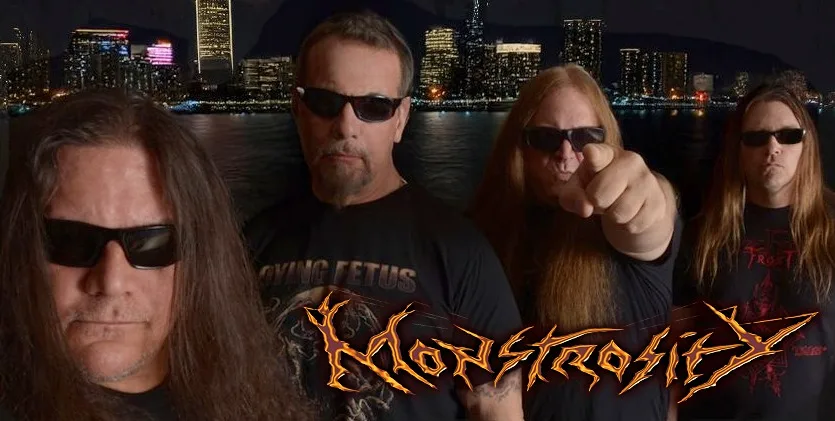

"Death metal history is written not only in albums but in the hands of the musicians who refuse to let the fire die. Few names embody that spirit like Lee Harrison, the relentless drummer, multi-instrumentalist and mastermind behind Monstrosity.
From the golden age of Florida death metal to the modern underground battlefield, Harrison has remained a constant force—pushing brutality, precision, and dark musical vision forward without compromise.
In this exclusive conversation with Extreminal Magazine, we dive deep into the legacy of Monstrosity, the evolution of Monstrosity and extreme music, the spirit of the underground, and the mindset required to survive decades in one of metal’s most unforgiving genres.
No trends. No filters. Just pure death metal reality from one of its true architects."
Monstrosity/ Lee Harrison Interview
When the latest Monstrosity album started coming together, did you have a clear direction in mind, or did the record slowly shape itself through the writing process?
LEE HARRISON: I'd say the album really shaped itself as I got deeper into it. I had several really productive sessions. The first four songs were actually written during the mixing sessions for the last album, The Passage of Existence. I was trying to get a head start. Then the next batch of songs came around when COVID hit, and everyone was staying in. I was kind of already quarantining anyway, so honestly, my life didn't change that much. But yeah, I spent the first half of 2020 working on what became the second half of this album. I was sending my songs back and forth with Matt Barnes, and we were both trying to push things up a level. He wrote 'Fortunes Engraved in Blood,' and we went back and forth on it a little bit, but for the most part, it stayed pretty much the way he originally wrote it.
The songwriting feels focused and mature. What helped you decide which ideas belonged on this album and which ones didn’t?
LEE HARRISON: I just kept working and helped shape the record. There were a bunch of ideas I didn't end up using, and I may or may not go back to them eventually. During the mixing sessions for this album, I came up with a ton of ideas too, but nothing's fully fleshed out yet, just ideas, no full songs so far. I may start writing again pretty soon, but I've been staying busy with other stuff at the moment, so I've got to finish that first. I'm working on my written test for my pilot's license, plus some other projects.
On top of that, I've been promoting the album with interviews and all that, so I've been pretty busy. Still, I'm hoping to get some more ideas recorded before too long. I've also been collaborating with the other guys on some new song ideas, and honestly, those are further along right now than my own song ideas. But there are definitely lots of leftover ideas still floating around... I just haven't really thought about them much since we wrapped up the writing for this one and haven't fully kicked into gear on the next record yet. For me, I can usually tell pretty quickly which songs are going to work. Once I know that, I just keep shaping them until they're finished. If something isn't working, I'll change it until it does work.
From your perspective behind the kit, how do you balance intensity and space so the songs can breathe?
LEE HARRISON: I can usually tell at this point, but I’ll still go play the songs and see where they need to be extended or trimmed. It really just depends on what the song calls for. At this stage, I think shorter songs are better, people’s attention spans are shorter (mine included), and it just seems to work better when you get in and out of a track quickly instead of dragging it out. Usually, I aim for between 3 and 5 minutes per song
Were there moments where simplifying parts made the songs heavier or more effective?
LEE HARRISON: There are a couple of things, like ‘on atrophied’, where I kind of toned down the craziness a little bit. I left most of it in, but there was a middle section that was honestly even crazier than what made it into the final version.
The production is powerful but clear. What were the main priorities during recording, and how do you feel it compares to earlier Monstrosity albums?
LEE HARRISON: We just try to take the lessons we’ve learned from the previous albums and apply them to the new one. Each album seems to have a life of its own, though, and you can’t really get around that. I’m glad about that. I wouldn’t want just a block of ice; I want there to be a little bit of life in the production. We spend a lot of time trying different drums or switching the cymbals around. We’ll record a take, listen to it, switch things around again, listen some more, and kind of go back and forth between the first and second takes. Then we’ll maybe do one or two more passes just to see what cymbals work where, which drums sound better. Sometimes we’ll go down these tuning holes where we’ll spend two hours trying to get rid of some little squeak, but it’s worth it in the end. You know, I just think it’s all the previous albums kind of put in a blender, with something new coming out of it. I don’t think it sounds like any one particular album. There are just parts from here, parts from there, that kind of thing.
Is there a song on the new album that you feel particularly connected to as a drummer?
LEE HARRISON: "Banished To The Skies" and "The Atrophied" are big ones for me. "Dark Aura" is also cool, even though it's not really challenging on the drums; it's just a great song, and I dig the atmosphere on it.
Monstrosity’s lineup has changed many times over the years. How have those changes shaped the band’s sound and creative energy rather than disrupting it?
LEE HARRISON: Well, being the main writer as well as the drummer, I've hopefully brought some consistency between the albums, regardless of all the lineup changes. Sometimes there's different chemistry with each group, but as long as it works, that's okay. I've been lucky to work with some killer musicians, and killer musicians tend to gravitate toward Monstrosity, so yeah… I've been pretty fortunate.
Looking across the discography, do you see the latest album as a continuation of records or a new chapter altogether?
LEE HARRISON: Each album is its own chapter. Of course, there are some similarities from album to album, but there's enough time between releases that I consider them their own separate eras, so to speak. Even though the new album doesn't sound like Imperial Doom, I still have the same overall outlook regarding what a new album should sound like.
Once the new songs hit the stage, did any of them evolve or feel different compared to the studio versions?
LEE HARRISON: Well, we haven’t actually played them on stage yet, but as far as the rehearsal room goes, there’s not much difference, just because I've played them so many times at this point. By the time I get them into the studio, I’ve already flushed out any issues, so I’m pretty certain about what I want the parts to be when we finally get in the room to record.
What kind of reaction from the crowd tells you that a Monstrosity song is truly working live?
LEE HARRISON: Well, screaming is a good sign to start with. It really just depends on where we are and what the venue is like. Sometimes in Germany, the crowd will just stand there with their arms folded, but they love the show every bit as much as the rabid crowds in South America. They just have a different way of showing it. But there's nothing better than a crowd that's really into it and openly showing their appreciation. Shows in South America are definitely the best because of that. We love playing down there, it's always crazy and wild, and everybody's just going nuts. A lot of times, they'll sing the melodies right along with us as we're playing them, or they'll chant the words. So that's always cool."
How would you describe your drumming approach today compared to the early Monstrosity years?
LEE HARRISON: The approach is mostly the same. I just try to incorporate the cool parts and keep things moving. As I've gotten older, I've started paying more attention to posture and things like that. But the flip side is, as I age, it gets harder and harder. Some of the older songs are tougher to play now. I just try to stay in practice as much as I can. I aim to play for at least an hour or so every day.
Has your sense of groove, dynamics, or restraint changed as you’ve gained more experience?
LEE HARRISON: I would say dynamics, I've tried to be more cautious about. I make my lighter hits a little heavier, and my heavier hits a little lighter. I'm trying to find a sort of middle ground so the easier parts don't sound super loud and the harder parts don't get too quiet. Things like that.... You learn to adjust the more you play the songs. It's just a matter of going for it and kind of tuning in with what's going on with the other guys, too. It really helps when you're not fighting to be heard, and you've got a good PA system that can carry some of the weight. Sometimes, if you're fighting to be heard, you end up pushing too hard. Then you can strain yourself and start playing in an awkward way. Before you know it, your wrist muscles swell up, and it becomes tough to keep going.
Outside of Monstrosity, how do your other projects or musical interests feed back into your creativity?
LEE HARRISON: Well, I've been fortunate to work on a bunch of projects that really sparked my creativity. It started with the project I did with Midnight from Crimson Glory back in 2007 through 2009, right up until he passed away. I was able to record and engineer his last works. On some songs I played guitar, on others I played drums, and on a few I was basically the whole band, playing everything, including keyboards and all. In 2012, I did a project with the Tardy brothers from Obituary, where I played guitar and drums, switching back and forth. That led to me doing a South American tour on guitar with Obituary, which was a really fun time for me. Kenny came back into the band, so it wasn't a permanent thing, obviously, but it was great while it lasted. I got to play some really big shows and some really fun ones. Again, I played drums for Obituary in 2018 as a fill-in session. That was pretty cool, too. It's always awesome playing with those guys; they're like brothers, so it's just fun doing shows with them. From 2013 to 2020, I played guitar with Pete Sandoval, doing the Terrorizer World Downfall stuff and recording the Caustic Attack album. Recording Caustic Attack was a very cool experience, and I'm really happy with how it turned out. The reviews were great for it, too. I was able to bring back the sound of the first album, which they'd kind of drifted away from on the second and third. So I brought back the original tuning and that original feel, but with more natural-sounding drums. It was a cool era. Of course, Pete went on to work with David Vincent again, so they're doing their thing now, and that's cool. No hard feelings. I wish him the best, so all good. Another cool, creative thing I did was working with Jon Oliva from Savatage and recording him in my living room doing a duet with Midnight on a song called "Painted Skies" (piano version). So basically, two of the biggest power metal vocalists from Florida are being recorded right there in my living room. That was an incredible experience as well.
When fans talk about classic Monstrosity albums alongside the newer material, how do you personally view the band’s overall journey?
LEE HARRISON: I still see it all as one thing, even though there were different lineups and different chemistries between those lineups. I've always managed to push forward and keep the ball rolling.
After all these years, what keeps Monstrosity moving forward and motivated rather than becoming a nostalgia act?
LEE HARRISON: As I said before, just keep going and moving ahead. Writing new records and pushing forward!
Related Articles
Toxic Crypt - Vultures (Lyric Video)
Raise Your Fist - Future Collapse (Music Video)
Mesker - Life Left
Comments
No comments yet.