
Black Task Interview With Steve Kristiansen
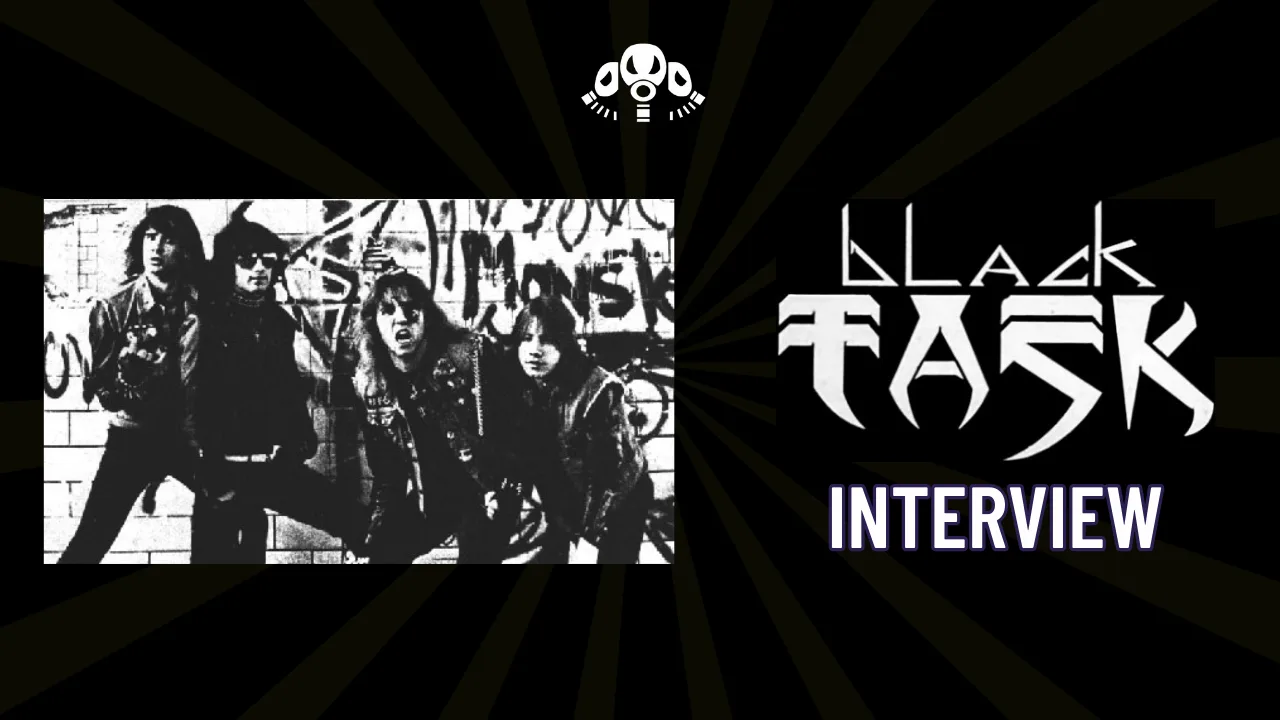

Black Task Interview With The Guitarist Steve Kristiansen
How did you come to discover heavy metal music? What were some of the early bands you heard and liked?
SK: In 1979, when I was in the 5th grade, my parents bought me Pink Floyd's ”The Wall”. Of course not, particularly Heavy Metal Music, but that started my journey into music. From there, I was listening to bands like AC/DC, Van Halen, and Led Zeppelin until I was introduced to the NWOBHM. I loved listening to Iron Maiden, Judas Priest, and Saxon, to name a few. That eventually evolved into Metal/Black Metal artists such as Venom, Slayer, Metallica, Anthrax, I could go on and on. I love that shit.
Now, how did you end up discovering underground metal music? Did you like it from the start, or did it take a few listens to get into it? Who were some of your favourite bands?
SK: I discovered most of the underground metal scene once I was a part of Black Task in 1984. I loved it from the start, some of my favourites. I already mentioned it along with bands like Exodus, Exciter, Mercyful Fate, and Raven. Again, I could go on and on, these bands were considered underground at that time.
What event or events led you to pick up the guitar? Did you ever take lessons, or were you self-taught? Who are your favourite guitar players?
SK: Listening to Eddie Van Halen, Jimmy Page, and Angus Young led me to pick up the guitar. I started at 12 years old(1981ish), and I took home lessons for approximately 1 year. My teacher felt he could no longer be of service to me after that.
I have so many favourite guitarists, but to name a few, Eddie Van Halen, David Gilmour, and most recently, Plini.
Now I am going to assume you decided to play guitar because you wanted to join or form a band, am I right?
SK: Correct, that was one of the reasons, along with impressing girls, that was my mentality at 12 years old. I know I am not the only guitar player to feel that way.
So, how did you end up joining or helping with the start of Black Task? Was it always you, Warren, Jim, and Gus?
SK" The band was originally a 4-piece called “Maidenhead”. I had joined as the 2nd guitar player, I was introduced to the band via Warren’s relationship with my sister. The band rehearsed at my parents’ house before I was even a member. Maidenhead consisted of Warren Appleby, Gus Santiago, Jim Trub, Eric Azvolinski, and me. Eric left the band shortly after I joined. He was not interested in the heavy-styled direction the band was going in.
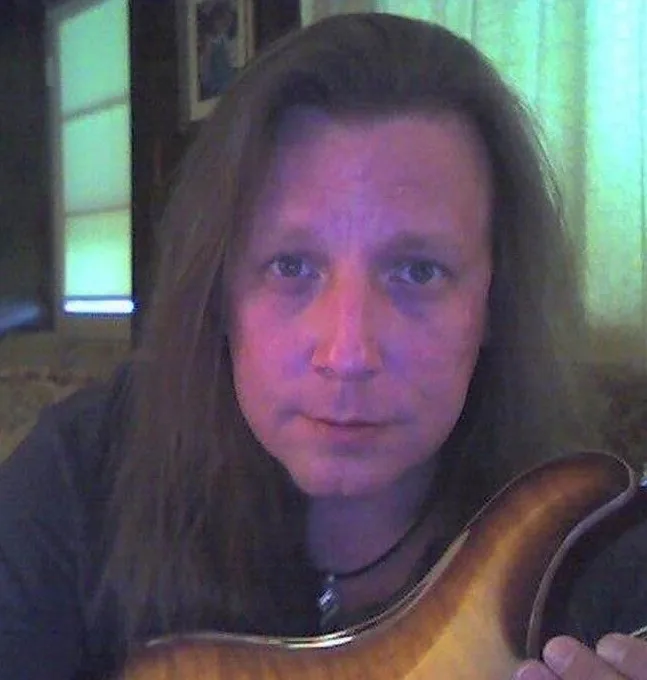
I know how the name "Black Task" came to be, but why don't you explain it to everyone?
SK: We never had intentions of keeping the name Maidenhead. That being said, we needed a new name. We discussed many different generic names until Warren came up with the idea of building the name from an acronym of all the members' surnames. Trub, Appleby, Santiago, Kristiansen(TASK). Task, that's a cool word? Lol. Let’s cap it with the coolest colour “BLACK TASK. We were young😁
Now, did you guys start to write your original songs early on? How soon were you guys together before that started to happen?
SK: From the beginning, it was everyone’s intention from the start to play and write original music.
How long were you together before your 1984 "Spikes to the Wall" demo came out?
SK: We were together for a little over a year before the Spikes to the Wall demo was recorded.
How long did it take to have all those songs come together?
SK: Not long, it was very amateur, within that year. Warren and I wrote Spikes, but the majority of the writing was done by Warren in those days.
Since this demo was released in the early days of the underground (1984), you did the blank tape-to-blank tape deal with a basic cover on it. Around how many do you think you released back then?
SK: I’m guessing here, I don’t believe it was many, 500+ copies
Besides selling them at shows, did you send them out to the early print zines that were around at the time? What were the responses and reviews like back then?
SK: Yes, as you know, the underground scene was huge prior to these days of the internet. The responses were very positive, these were mostly college radio, European Fanzines, and the demo was also featured on Philadelphia’s 94wysp’s Metal Shop.
This was a good start and prepared the band for our First EP release.
Do you have an original copy of that debut demo around? Do you know several people who have put up the entire demo on YouTube?
SK: Unfortunately, no, I do not have an original copy of the demo. I believe Warren has a Master's. I have seen the uploads on YouTube, I have no affiliation with any of these people.
How long were you in the studio for, and around how much did it cost you to record it, if you remember?
SK: Like I said previously, it was pretty amateur. I seem to remember 2-3, 4-hour sessions costing approximately $500.00ish.
What was your live show like? Do you remember where it was and who you played with?
SK: I can’t be 100% certain, but as Black Task, our first show may have been at The Galaxy in South Jersey. I can’t recall who we played with, it was a weeknight, and I remember being concerned about my age (14 Years Old)and the admission age of 21+. Of course, the live show evolved over the years.
Now, after 6 months or so, did you start to write some new tunes, tunes that would end up on your vinyl EP that came out in 1985?
SK: We were constantly writing new material with no specific end game, again, we were young.
Now, what made you decide to release an EP on vinyl and not just another demo?
SK: Back then, Vinyl was the primary medium, and the EP format seemed to be the next best step in the evolution of the band.
Did you go to the same studio for the EP as you did with the demo? Did you know that with the EP, you were going to have to step it up a bit on this release, as this was going to be on vinyl and not a demo?
SK: If I remember correctly, we did use the same studio as we used with the demo. Of course, the plan was always to step it up, but the process was still very primitive, as there was no real master plan. Everything materialised organically.
Where did you get the vinyl pressed, and how many copies to pressed and did you ever do a repress after the initial first run ran out?
SK: The vinyl was pressed at Disc Makers in Jersey, 1000 copies. Eventually, we did repress after the first run was depleted.
I got to know you guys from playing the Empire Rock Club in Phila, PA on Sunday nights when they had their all-age metal shows. What are some of your memories of those days playing there?
SK: Yes, I remember those days, Great Days. Thrash Metal was in its infancy, Metallica had just released “Kill Em All”, all this music was very underground, and the Empire Rock Club had started their “All Ages Sunday”. This is when the original music scene in Philly was at its height and growing stronger. It wasn’t easy drawing a crowd initially with the style of music Black Task was performing. Surprisingly, it caught on quickly, those Sundays were some of the greatest. I remember some great shows with our friends Anvil Bitch. There was nothing like it back then.
What are some other clubs that you played around the area? Did you manage to play any shows in North Jersey or NY during the band's career?
SK: In the area, Black Task played mainly The Empire Rock Club, The Galaxy in South Jersey and The Trocadero in Centre City Philadelphia. One of the most memorable shows was at The Penny Arcade in Rochester, New York. That appearance kicked off with a record store signing, a radio show appearance in the evening, and the show the following day. We were initially supporting Metal Church on this date, but they had to cancel at the last minute. The show went flawlessly even with their absence.
Now with the demo and the EP, I know you guys knew about the underground tape trading scene, college radio, and fanzines at the time. Did you send many out to college radio and fanzines? What sort of feedback did you get from fanzines with the demo/and or EP?
SK: Black Task was very involved in the underground tape trading scene worldwide. I remember many college radio chartings and fanzines. The feedback was outstanding, especially in Europe. We even had a small European tour set, but unfortunately, we could not get the tour funded. We were still independent and had no official backing.
Now, and this is only if you remember, but why did the demo have a name, "Spikes to the Wall", but the EP had no title?
SK: The demo was named “Spikes to the Wall” only because that was the first song recorded. The EP was the true introduction to Black Task, and we thought, as many other bands have done, just name it “Black Task”.
Any particular reason why the cover of the EP was just your logo on the front of it?
SK: The logo on the front of the EP was a lithograph Warren had done for a college project. I can’t remember the exact details of the material, but it was an engraving into a rock-like material.
Did you attempt to send the EP to any of the indie record labels that were around? Damnation Records was your label, correct?
SK: Yes, Damnation Records was our own label, we did eventually send that out to many of the independent labels (MegaForce, Combat, etc).
If I am not mistaken, you had management at some point, a guy named Larry Goldfarb, is that right from Goldfarb Entertainment?
SK: Black Task was never officially signed with Goldfarb Entertainment. Larry did a lot of the initial Empire Rock Club Bookings.
So, who was doing most of the mail, Warren? If he was, did you see much of it and read it? Did you have much of a following overseas?
SK" Warren did all the mail correspondence, we did see most of the mail during practices. All the mail was extremely positive. I would say the majority of the feedback came from overseas, we did have a large following in Germany and Belgium.
Now, did you get a chance to play much up in North Jersey, which had a lot of clubs or Lamours in Brooklyn, NY, at all?
SK: We did play several small venues in North Jersey. The band never did get a chance to perform at Lamour's, the only New York shows were Rochester and New Rochelle.
How would you rate yourselves as a live band looking back?
SK: Looking back, I would say we were winging it; we did get a lot of experience, but we were very young. As I got older and performed in several other bands, I realised that Black Task was a rookie live act, but it couldn’t have happened any other way.
Now with the EP, did you get much label interest besides Axe Killer Records?
SK: My memory is shot when it comes to this. I know we had some other independent labels interested, but Axe Killer gave us the best deal.
Because you had an EP out and a demo, even though this was an overseas label, did you feel as a band, this was the next logical step to take, and that was to have a full-length release out and on a record label?
SK: Of course, that was the plan from the start.
Was it an actual recording contract, and was it for more than one album? Did they give you any kind of budget at all?
SK: Yes, it was an actual contract, because of the independent nature of the label it was only for one album. The only budget we had was they chose and paid for all the studio time.
I saw there were all new tunes on this record. Was that the plan to have all new tunes and no tunes from the demo or EP?
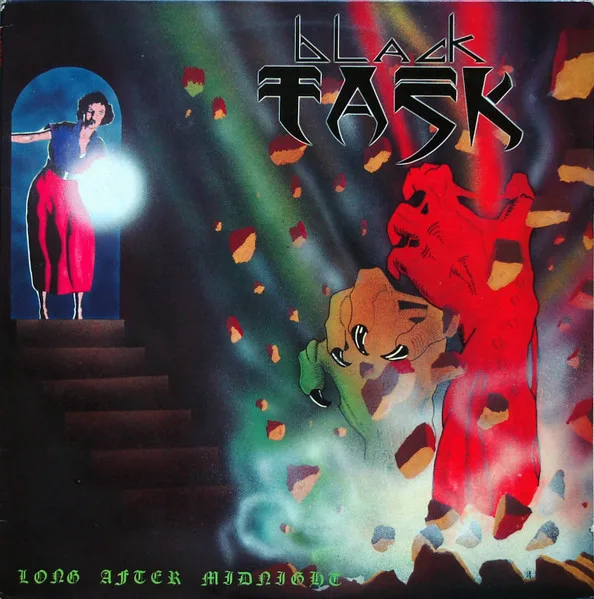
SK: As you might remember, Black Task was trying to find its identity before and during the recording of that album. We did evolve a bit and experimented with different styles. Spikes to the Wall from the first demo was featured on the full-length album “Long After Midnight” but was rewritten and went under the name ”Terminal Frost”.
So how long did it take for you to come up with the songs that appeared on the album? How long were you in the studio?
If my memory serves me right, all the tracks on “Long After Midnight” were written within 6 to 10 months while we were performing shows in the area. Axe Killer Records hired Don Cugini, a former guitarist for Leif Garrett and a coming independent producer. We spent about 4 months recording the album at “The Sound Bank” studios, Philadelphia.
Why the title "Long After Midnight"? The logo changed a bit, too, did it not?
SK: Originally, the album cover featured a photograph portraying an act of sexual domination that Axe Killer Records refused to release. The record label then commissioned an artist to render a piece of artwork after one of the tracks on the album. This track, of course, was named “Long After Midnight”. We had changed the logo before the release, the band was very much in its infancy, and we were trying to evolve.
Now Steve, to be honest, I was not a fan of the album and the new direction you guys took with this album. I was expecting thrash and speed like the demo and EP and this was in the middle of the thrash metal explosion (1986) when your album came out. Was it a full-band decision to change styles?
The change was Warren’s decision, but we were all on board. I was 16-17 years old, We were all just going with the flow. I loved the Thrash/Speed metal style, but always wanted to explore the potential of other styles.
What was the reaction from Philadelphia fans of the band and from fans in general as well? Was Axe Killer Records cool with this new direction?
SK: Well, it was a bit mixed. We did lose a large fan base, but then again, we gained a new fan base. Axe Killer was supportive of the new direction.
Did you do a record release show for the album coming out? What was it like playing live after the album came out, as you had the less speed and thrashy tunes from the album, and total all-out speed from the demo and EP tunes?
SK: I can’t remember doing an actual record release show for “Long After Midnight”. Like I said previously, we lost a large fan base. I remember looking out into a crowd of middle fingers when we would start performing the more commercial tracks.
How were the sales of the album if you ever found out? Did Axe Killer send a bunch over for you to sell at shows and local Phila, PA record stores at the time?
SK: I was never really involved with the business part of the music; that was Warren and our Management. I believe sales were modest.
Is the album out of print, still in print, or if it is out of print would you ever want to see a re-release of it?
SK: The album is out of print. Over the past couple of years, I have had a few independent labels reaching out to me for a re-release of the EP. I would be on board with a re-release.
Now I read you recorded a 5 song demo after the album came out in 1987, but it was never released, but one song came out in 2010, which will get to later. What style were these 5 tunes in?
SK: Yes, in 1988/89 we recorded a 5 song demo at Signal Sound Studio in Quakertown. These 5 songs had a much more commercial sound than anything we have done this far. Perhaps a more radio friendly Hard Rock. I imagine you would not have been a fan of these recordings. We never fully completed the demo(Final Mix/Mastering).
Now at what point did the band decide to break up? Was it a mutual decision by the 4 of you or did one quit and then another etc? Was it a nasty break-up or a friendly one?
SK: It wasn’t a nasty breakup, but it seemed a bit indifferent. Gus got married and went on with his life. Warren decided he wanted to go in another direction musically. Jim and I stayed together and recruited a new vocalist and bassist. We had planned to finish the demo with the new members, but Warren wasn’t having any of that and scooped up the masters before we had a chance. So in the end, it wasn’t a clean break-up.
What did you do with yourself after the band broke up? Did you join any bands at all, or did you put the guitar down? Were you asked to join any other bands over the years?
SK: Like I said previously, after disbanding, Jim and I worked together for a bit till he moved down to Florida. I later joined/formed several original acts, “Today we Live, Noodle, Highwater and at the same time worked at various studios in the area, Recording/Producing local acts. I currently Broker (Collect, Buy and Sell) High End Boutique Guitars, ie, Aristides, Skervesen, Abasi, etc. I still play more than ever, The Guitar is my life’s passion.
Did you follow with what Anvil Bitch did, releasing an album, Cinderella being discovered by Bon Jovi, Britney Fox, who suck, releasing an album, and The Trocadero hosting the Ultimate Revenge 2 in 1989?
SK: Most of that, yes, speaking of Anvil Bitch, I was in contact with Gary in 2010. They were planning a reunion, and we briefly (and I mean briefly) spoke of me joining as a 2nd guitarist for the reunion. Unfortunately, at that moment, I was unable to invest the time needed for that project.
How about Metallica selling over 10 million records of their "Black" album? Did you know about that back in 1990? Now they play stadiums and are the biggest metal band around, even though not a thrash band anymore.
SK: Yes, I was a big fan in the beginning, “Kill Em All” & “Master of Puppets”. I guess they were instrumental in bringing that sound to the masses.
Now, were you aware of this split 7" that came out in 2006 on Bestial Burst Records, who are still in business by the way, and it features 2 demo songs: "Harbinger of Death and an unreleased demo track called "Warriors of Hell"? Do you have a copy yourself or not?
SK: I was aware of this release after the fact. I know Jim has a copy, but I don't.
Did you know that Warren released a single tune from the 1987 sessions digitally, the song "Polaris" in 2010? Have you guys ever talked about getting back together over the years?
SK: Yes, I was in contact with Warren around the time he released our recording of “Polaris”.We did not speak about getting back together.
In 2012, Radio Raheem released your demo and 12" that you put out back in the 80's on a 12" full-length vinyl release. Did you know anything about it at the time? If you did not, when did you find out about it? Do you even have a copy of it?
SK: I’ve heard of this, I do not know any details on this independent release, and I do not have a copy.
Now with the internet and social media these days, have you talked to any of your old band members in the last decade besides what you told me in an earlier answer?
SK: I am in contact with Jim Trub on occasion now and then via social media, but no contact with any other members.
I think you guys if you would have stuck with your original style some label would have easily signed you guys and then from there who knows what would have happened. Do you agree with me?
SK: I agree with the premise, but that was never going to happen. We were young and very influential.
Now I know of at least 3 labels to my knowledge who would like to re-issue your demo and EP onto a CD, maybe vinyl or cassette as well. I am to assume Warren has control of all that and he can't be found right?
SK: Yes, that is correct. I was in talks with 2 Labels regarding a possible re-issue. Warren does own the publishing and is currently MIA. I will keep you posted on this. (it sucks cause it would be great if this was re-issued-cf)
Do you have copies of your demo, EP, and Axe Killer release and maybe a shirt or some merchandise somewhere?
SK: Sadly, no.
What are some memories, good and bad, you have of the band?
SK: Many great memories, including our Rochester, New York, Show and Radio Appearance. Our Radio appearance in New Rochelle, New York, was very memorable, or should I say not so memorable because of Jack Daniel’s. All the Empire Rock Club shows were great times.
Have you ever had anybody from Facebook or some other social media site reach out to you like I did asking if you were the guitar player in Black Task?
SK: Yes, I have, several times.
Have you ever played any of your music to anybody from these other bands you have jammed with?
SK: Most of the bands I have played with have known of my roots with Black Task. So yes.
Do you still follow the metal scene at all? No more fanzines, pen-pals, tape trading, writing letters, tape trading, etc around anymore. Though cassettes have made a comeback, a little though, some labels sell them, believe it or not.
SK: Yes, I still follow the metal scene and a lot of the progressive acts out now. I have not heard of a resurgence in cassettes, I guess they are nostalgic but can not see them as a viable medium.
Steve, horns up for the interview. I will never forget those Empire Rock Club shows. Any words to wrap this up?
SK: Thanks, Chris, it was great to talk with you, they were incredible times.
Chris Forbes
WriterChris Forbes has been covering the underground metal scene since the late 80s and runs the Metal Reviews column at Extreminal.
Related Articles
Demolition: The Encyclopedia of 1980s Metal Demos Chat
Azarath Interview With Bart
Necrot Interview With Luca Indrio
Comments
No comments yet.