Interview With Van Labrakis From Nite
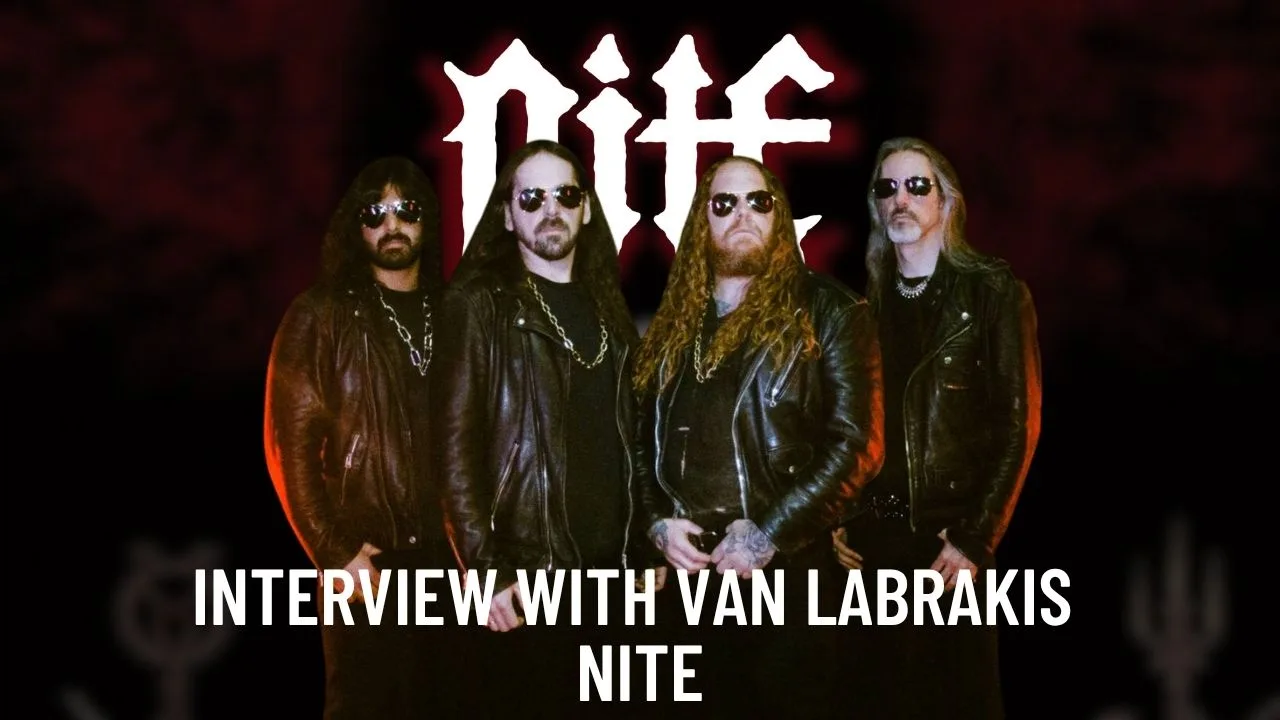

NITE: Heavy Metal Beyond Subgenres – An Interview with Van Labrakis
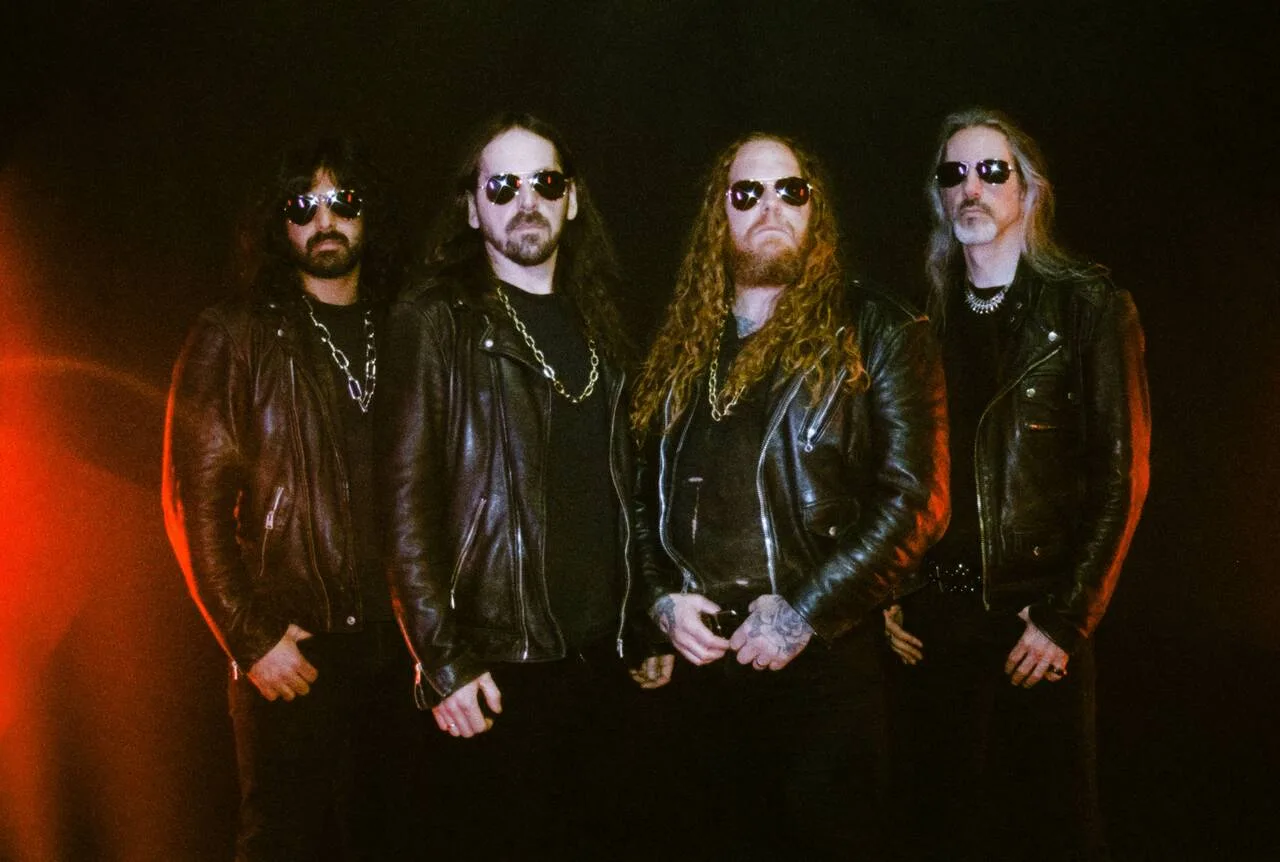
We had the pleasure of interviewing Van Labrakis from the San Francisco/California band Nite. Founded in 2018, and proudly displaying the N.W.O.B.H.M. sound since 2020. Recently, they released their third album, "Cult Of The Serpent Sun" (2025) under the label Season Of Mist.
From the 90s Underground: NITE's Musical Roots
Faynkaos: Hello Van, and thank you for granting me the pleasure of interviewing you in the name of your band Nite. How are you doing?
Van Labrakis: Thank you for having me. We are doing good. We just came back from our first US East Coast / Canada tour. It was the first chance we got to visit those parts, and people showed up in a big way. We got to hit the road with our good friends in Savage Master, so that was an extra treat. We always get a little of the energy of our touring partners; it “rubs off,” as we say. It happened with Bewitcher, Persekutor and all the other great bands we’ve toured and played shows with. So, having a little bit of the Savage Master theatre of the macabre energy rub off on us is a very good thing.
Faynkaos: That’s great to hear, and I am glad things are going well for all of you! I accidentally came across the band in 2020, around the release of your debut albüm «Darkness. Silence. Mirror. Flame». The Old School sound and the skills that show in the album, musically and lyrically, made me assume you’ve been around in the Metal scene before that year. Where were you musically before Nite?
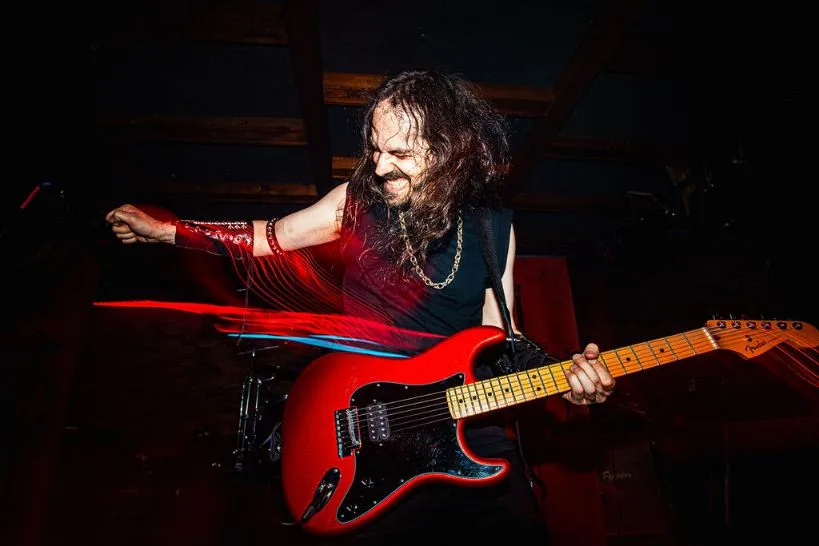
VL: Most of us have been around for a while! Me, Patrick and Scott are in our 40s and have been playing music in bands since the 90s. Avinash is a little younger, in his mid-30s, but he still has a lot of touring experience under his belt. We’ve all been in a bunch of metal bands. My most significant ones are Satan’s Wrath, we did 3 albums on Metal Blade a little while back, and before that, I was playing technical death metal in Mencea for a while. Mencea did a couple of albums on Indie Recordings in Norway. Scott has been a member of the mighty Dawnbringer and High Spirits for a long time, among many other cool bands and projects. Patrick's most recent endeavour includes Mustard Gas and Roses, with Michael Gallagher from Isis, if you recall, and he had a legendary moment of touring with Aus-Rotten back in the 90s. Avinash plays drums in the awesome band Vorlust from the Bay Area and has toured the US a bunch of times with a few other bands.
The Genesis of NITE: Misspelling & Metaphor
Faynkaos: I had no doubt you all have experience, as I said: it shows in the skills! So, how was the band formed? And what is the genesis of the name « Nite »?
VL: NITE was formed shortly after I moved to the US from Europe in 2015. I started recording some demos in 2017 in deep frustration during my struggles of readjusting to the US society. I was in LA at the time, trying to find musicians to get this thing off the ground. I ended up moving to San Francisco a little while later. A friend of mine from Germany connected me with Patrick and our original bass player, Bryan Coons. The rest is history. It took us a while to finalise the name. We wanted to go by ‘Night’ but the Swedish band beat us to it. We went with the ancient heavy metal ritual of misspelling our name to ‘NITE’. NITE, or Night, to us is a representation of the metaphorical nighttime of our lives. Times of hardship and struggle. Heavy Metal was there for all four of us during hard times. It gave us the strength to keep going. The music was a companion to us all through these times. For me personally, it’s also a reminder of all the tough places I managed to get out of in one piece. That’s what we set out to do with this band. To be there for people who are going through hard times. To give them a little more strength to clinch their teeth, tighten their grip and move on. Carry on.
Defining the Sound: Heavy Metal Beyond Subgenres
Faynkaos: Musically speaking, your genre or rather subgenre, is a mixture of many things, one of those « hard to classify » bands, since we can hear a strong New Wave Of Old School Heavy influence for sure, and a Blackened aspect yet on a D standard tuning, which is I think, unusual, when it comes to a sound that files under the Black(ened) category. How would you define your sound?
VL: Genres. Don’t get me started! I have many friends who are music journalists, and I’ve been through this many times before. I understand that labelling things makes it easier to get an idea of what we might be like or to promote the band, etc. For me personally, this is Heavy Metal. I’m not a big fan of sub-genres. We didn’t exactly plan or design this to be what it is. We just set out to play the kind of metal we like to play in 2025. This is a pretty potent mix of all our influences. What I always liked about Heavy Metal is that you don’t have to follow the rules of what should be. I think we have forgotten that a bit nowadays. I think labelling things and fitting bands in sub-genres might have something to do with that. Everyone is afraid to make the slightest deviation from their sub-genre norms. There’s a lot of uniformity out there and little progress in my opinion.
From Greek Folklore to Personal Tragedy: Lyrical Themes
Faynkaos: I definitely agree with you, but “genres” to me is just a technical word that refers to the different ways and possibilities of expressing Metal as a whole. In «Darkness. Silence. Mirror. Flame», which is the first Nite album, we sense the darkness in music but also in the lyrics. I feel like it's about supernatural and metaphysical powers (Lucifer, Ezelia, Night Terrors). When I came across Night Terrors for the first time, reading the lyrics made me think about sleep paralysis (sleep apnea). It sounds like you humanised the phenomenon, and gave it a voice: "I, I am the night … No one will save you, no one will know…" Can you tell us what inspired you to write Night Terrors?
VL: During that time, I was very inspired personally about many things Greek, as I was probably homesick. I remember Lamia being a thing I was into, and other Greek folklore tales about night visitors. There’s another recurring one in folklore about the “presence” behind the closed door talking to you, luring you, etc. And also the “beginner’s ritual” of holding 3 candles in front of a mirror, which is also depicted on the cover. Fate never lacks irony, as they say. Shortly after the album was finished, I had a terrible family tragedy that involved a lot of darkness, very much related to this song. Everyone is OK now, but it took me years to recover from it. I remember signing our first record contract in the lobby of a hospital when I first realised the irony of it all.
Faynkaos: I am so sorry you went through all this. Some tragedies later make us realise many things, as you said, and if we are strong enough to survive them, we earn access to wisdom! You’ve been releasing some official videos since day 1; some of them are straight to the point, like «The Way», others seem to be more complex. In the official video «The Trident», we witness amazing cosmic effects and an outstanding guitar solo. Do you, as a band, contribute to creating a context for your official videos? I mean, is it related to your lyrics and concept?
VL: These early videos were, for better or worse, done by me and Scott. We had a more limited budget at the time, so we had to bootstrap a lot of things. Me and Scott did the ‘Trident’ video. Too much work! Way too much work. I think we shot for 9 whole days for that one. All the concepts are related to music; of course, we go through that process when we write lyrics. We need the songs to make sense to us. If we don’t get excited about the story of every song, no one will! That approach changed slightly in this album cycle. Marcelle Marais is the incredible force of nature behind the ‘Crow’ video. That was the first time someone outside the four of us worked on a video, and I don’t see us going back. We had a few extensive video calls with Marcelle about what the song ‘Crow’ means to us. She took all that in and came up with this awesome video. We couldn’t be happier! We are also stoked that this is our most successful song and video to date, with 185k views on YouTube currently. For us, that’s a big number. We are not exactly Taylor Swift over here!
The Colour Palette: Concept and Evolution in Album Art
Faynkaos: “The Crow” is, in fact, a success. Every one of your fans lived with you, even us who are outside of the U.S., followed the process step by step and kinda shared the happiness with you when the work was done: that outstanding, intense red effect! Speaking of red, let’s shed light on colours! There is a contrast of colours but also of concepts, between «Darkness. Silence. Mirror. Flame» (2020), «Voices Of The Kronian Moon» (2022), and now «Cult Of The Serpent Sun» (2025), your new album that joined the discography earlier this year. The contrast shows not only in the lyrical themes but also in the colour «palette» you chose for every album cover. «Kronian» is definitely a brighter album compared to «Darkness…» while “Cult…” is more intense with red as a dominant colour. Any comments on this observation?
VL: Absolutely. Each album represents that moment in time for us. As I hinted earlier, I personally went through a serious personal life issue in 2020, followed by the pandemic, which, to be honest, was a cakewalk in comparison! I really wanted to move away from horror at the time. I was dealing with PTSD, so it was just not an option. I think I steered the band to this ‘Voices of the Kronian Moon' “sorry guys, we are in space” trajectory. It worked well because I think the whole world needed an escape at the time. With ‘Cult’, we returned to our horror roots. We wanted to create more songs in that darker, horror domain, as we needed more of that element in our live shows, too. There are still moments like ‘The Mystic’ or ‘Carry On’ that are much brighter and uplifting in comparison, but I think the dark gloom of horror weaves through this one. The colour of the artwork and even the artist we collaborated with every time is also connected to these concepts. DEIH, who did ‘Voices’, is appropriately “out there” for that album. Adam Vick from Dark Meditation really nailed the atmosphere and feel of ‘Cult of the Serpent Sun’. We knew it had to be red, and had bits of ideas of what we were going to, but Adam, again like Marcelle, trans-mutated all that into gold, as Mr. Maynard Keenan used to say.
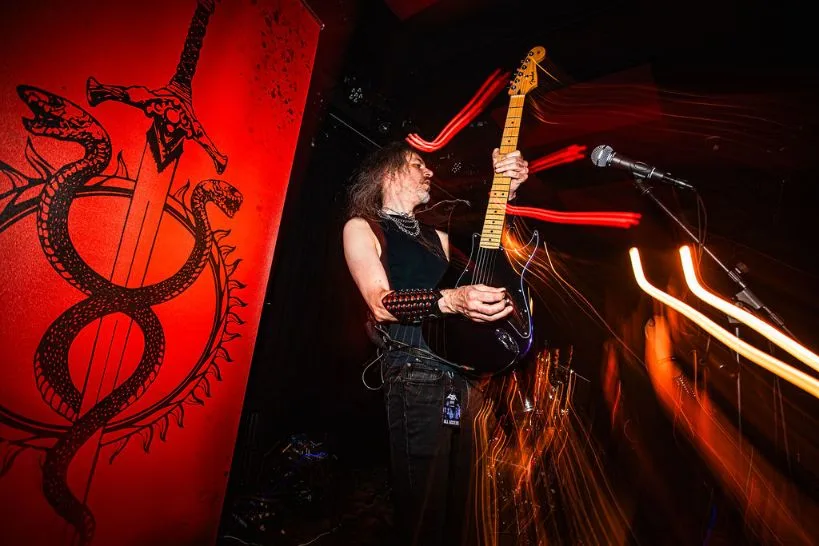
Hellenic Archetypes: The Identity of 'Kronian Moon'
Faynkaos: You’re Greek, and whether there is a connection between your roots and the second album’s concept or not, anyone aware of Hellenism can sense the strong Hellenic touch in “Kronian…”; the sun is the star of the show despite the "moon" being highlighted in the title. «Acheron, Chariots of heaven, Lord of the sun, Heliopolis…», and other traces of Hellenism… What is the role of Hellenic symbolism in «Voices Of The Kronian Moon»? Is it an identity touch?
VL: There is definitely a lot of “me” in there, for sure. Not exactly in ways you would expect, but these are all things I can relate to personally. As I mentioned earlier, we as artists need to connect with the subject matter on a personal level. On the other hand, these are all very universal archetypes. My connection to them is one small aspect of them. Everyone has their own connection and life experiences relating to the archetypes and symbols of the sun, moon, Saturn, heaven, sky, stars, etc. They are the vehicle for storytelling. I find this way of writing way closer to writing music. Music is a condensed language that operates, in my opinion, on a higher plane than speech. Another time, I might tell you that speech is the root of all our human problems. Welcome to Babylon! But I’d leave that for another day. Fun fact, Heliopolis is the district of Athens that I grew up in, as well as, believe it or not, the street on which the Season of Mist office is located. Many childhood friends got the nod in that song. For me personally, this is a song about my childhood, finding my path, persevering through a lot of hard times and managing to follow my dream of becoming a professional musician by leaving Greece back when I was 19. But who cares about that? What matters is what that song means to every one of you.
From Zappa to Judas Priest: Musical & Non-Musical Influences
Faynkaos: Actually, I do care about the context of a song, and how personal it is for the musician. I remember Bill Steer of Carcass saying in one of his interviews: I didn’t feel the need to meet most of my favourite musicians in person because I know them in their music and lyrics. Anyways, speaking of “favourite” musicians, I assume your main inspirations are other artists that prioritise the melodic sound just like you do. It would be no surprise for me to know Iron Maiden and Steve Vai are among them. Can you summarise for us the musical and non-musical influences in the process of writing both the music and the lyrics?
VL: Gladly! There’s a lot in there. I’ll try to include everyone as much as I can. There’s obviously a lot of Iron Maiden in there; we all adore Savatage, Sabbath, Metallica, Megadeth, etc. Me and Scott are a little more European Metal versed than the other two. Blind Guardian are a big deal for me, Helloween, Gamma Ray, Running Wild and early Rage. Patrick has a significantly more punk background than the rest of us, so I know he has always been very much into Discharge. He has been going through a maniacal Savatage phase for the last few years, which is a very good thing. Avinash is probably the most encyclopedic heavy metal person I know, and that says a lot, as I know many heavy metal scholars! I think, judging by the giant Judas Priest tattoo on his bicep, I’d say he likes Judas Priest a lot!
Other than music, 80s and 90s SciFi movies are a big deal for me and Scott. Scott and Patrick are horror movies PhD professors. They are really on another level. I’m confident they have watched every horror movie out there, multiple times. Scott is also a little extra obsessed with Dario Argento. I love comic books, mainly European ones, Moebius, Bilal, etc. and video games, from the Amiga game Moonstone, and Conquest for Camelot (which by the way came with a game manual named “Liber ex Doctrina”), to modern ones like Dark Souls and the like. There’s a lot in there. A lot of different influences shape what our music and stories are about.
Faynkaos: You also have music engineering and production skills, cause very recently, I discovered the fact that you contributed in one of the best Black Metal albums of all times, «First Spell» by Gehenna (1994), taking care of the mixing if I’m not mistaken, which I find outstanding, why I wanted to include it in this interview. Can you tell us more about this experience?
VL: I wish I had done the original mix of the legendary Gehenna album, but my career started in 1999. I did the remaster of that album much later, in 2008. I’ve been working as a sound engineer, as I mentioned, since 1999 and later on as a producer since around 2005. I started working in studios in the UK, did a lot of pop and electronic music, moved to Germany and opened my own studio, 210 Studios Berlin, where I did a lot of albums for metal bands from Norway and Sweden. Eventually, I managed to focus only on metal productions. I naturally engineer and produce all NITE albums. That was the whole point for me when I first started in music back when I was 14-15. I remember spending every last penny I had on truly terrible demos at some local studio in Athens. It was not going to work out! I had to be able to record and experiment myself. I eventually went to several sound engineering schools in Athens and London. The desk, the console, the DAW nowadays, for me, is part of the process. It’s my tool for writing songs. My heroes are Frank Zappa, Peter Gabriel, Trent Reznor and so on. I think production is part of songwriting. I can’t see them as separate. I love to get help and opinions from engineer friends when I’m working, of course. But I’d say I’m not your traditional, by-the-book, sound guy. I heard someone say recently that producers are equal parts musicians and engineers. As I like to say, I’m too Greek for Americans and too American for Greeks. I’m too sound engineer for musicians and too musician for sound engineers.
Faynkaos: We all know how hard it is for an authentic band to become popular, but it seems like things are going well for you, and you've gained popularity quite fast since 2020, and right after the covid nightmare, you started touring non-stop, multiple times across many areas of the U.S. How did you achieve that without having to compromise your authenticity?
VL: I like to say often to the guys that our greatest achievement so far is that we stayed together for 7 years. I think there’s a natural filter there, a natural selection process. Music, in general, is so hard that if you don’t absolutely love what you do and the people you do it with, it can not last. There is an incredible amount of shit that you have to go through to get on stage every night and perform, to finish the albums, to practice your instrument every day, to actualise your vision and so on. If it’s not done for the right reasons, it will eventually fall apart.
Faynkaos: Back to «Cult Of The Serpent Sun»! When it comes to your last release, I feel like, musically, you released the tension compared to the first tunes, I mean, things seem more on the easy-going side; mostly easier and more relaxed riffs. A perfect example: the intro of «Crow (Fear The Night)», «Skull», «The Mystic», and «Cult Of The Serpent Sun». Is this an attempt to take a rest from Dark and heavy stuff? Does it have anything to do with going more melodic and less technical?
VL: Interesting how the album came across to you. Believe me when I say that this is some of the hardest pieces of music I’ve ever played! Haha… I’ll take it as a compliment that it sounds easy and relaxed. It’s not! The title track, ‘Cult of the Serpent Sun’, in particular, has some very intriguing guitar work in there. The first guitar lead is maybe the most unhinged lead I’ve managed to put on a record, and the ending section with the 5/16 over 4/4 is particularly challenging (for a certain drummer in our band, haha…) but it’s so cool to play live. We set out to do a darker album, the thematology was darker, but I think the lighter songs like ‘Carry On’ and ‘Winds of Sokar’ might be shining a little too bright! ‘Crow’ is definitely one of our most stripped-down songs, but it took us a long time to make it work like that. We got to play that song live for a while, back when we were still recording. We changed it a lot based on the audience reactions, and that’s how it took this form. Still, simple doesn’t mean easy!
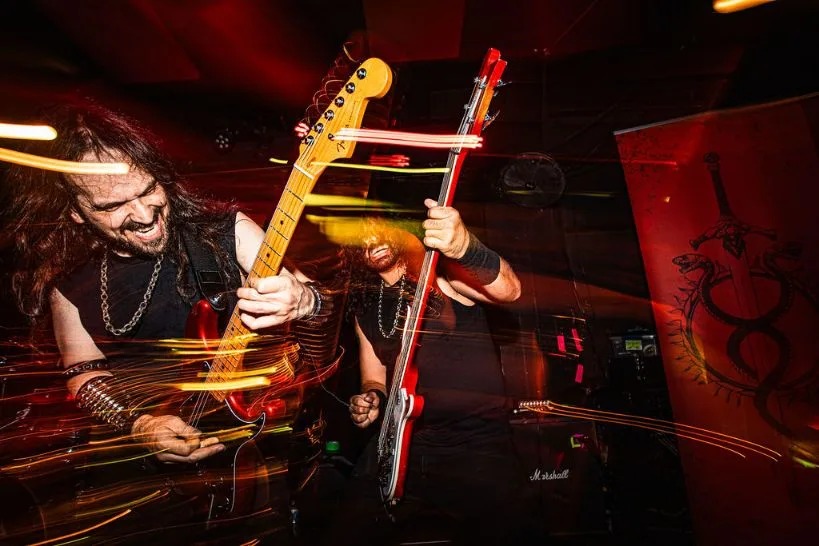
Faynkaos: This can be only because you are getting even better and better, so the sound seems so relaxed. And I know that it is far from being easy! I can remember when I tried to play “Acolytes” with my electric guitar a few years ago and ended up crying! Anyway, despite the “harmony” (let’s call it so) in “Cult…”, one song is way more complicated than anything there, but also different from anything else you’ve ever composed. I’m talking about «Carry On» which is my favourite song. There is an incredibly dominant progressive touch in this amazing piece, from start to finish, with those unpredictable circular moves that always end up in the main riff. How important is this song? What is the story behind it?
VL: I’m glad you like it. ‘Carry On’ was supposed to be on the ‘Voices of the Kronian Moon’ album, but we just couldn’t figure out the chorus section back then. We were trying too hard to come up with a grandiose chorus, and it needed something much simpler than that. We love it. It feels great live, it feels great on the album. There’s a lot of ‘Toto’ in there and a bit of ‘Def Leppard’. We listen to both bands often on the road while touring. That is, I think, our subliminal nod to ‘The Loneliness of the Long Distance Runner’. The message is simple, as Frank Zappa once said, “Don’t stop. Keep going.”
European Tour Plans & Final Message
Faynkaos: Amazing! Speaking about touring, I guess you have a large audience in Europe, from what I noticed, also being with “Season Of Mist,” which is a very important and highly regarded label. Did this make you consider touring Europe? The idea in itself sounds promising, and the European scene is doing quite well right now, going back to the Old School sound, at least from my own perspective.
VL: Indeed. I am from Europe originally is making it particularly important to make the trip overseas. I grew up in Greece, lived in the UK for a few years and a good decade in Germany right before moving to the US. NITE is a very European-sounding band, so it comes as no surprise that it resonated with people over there. We are currently working with our European booking agent to make this happen. We came very close at some point last year to coming over with Spirit Adrift, but it didn’t pan out. It is an expensive endeavour, and we have to make sure it makes some sort of financial sense for four dudes from the other side of the world to come all the way over here for a few weeks. It will most definitely happen; the question is when!
Faynkaos: Thank you so much, Van Labrakis, for answering my questions. I wish you and the band Nite more success, and hope to see you touring Europe. One last word for the audience?
VL: Thank you for having me! Be nice to your fellow human beings, stop procrastinating, and get out there and follow those dreams of yours. Life goes by fast. Listen to heavy metal, and we’ll see you all very soon.
Related Articles
Exumer Interview With Mem Von Stein
Tormentor Interview With Attila Csihar
Immolation Interview with Robert Vigna and Alex Bouks
Comments (1)
-
Cenk Ansen 28 October 2025Nice interview