
Interview with Giuseppe Emanuele Frisone
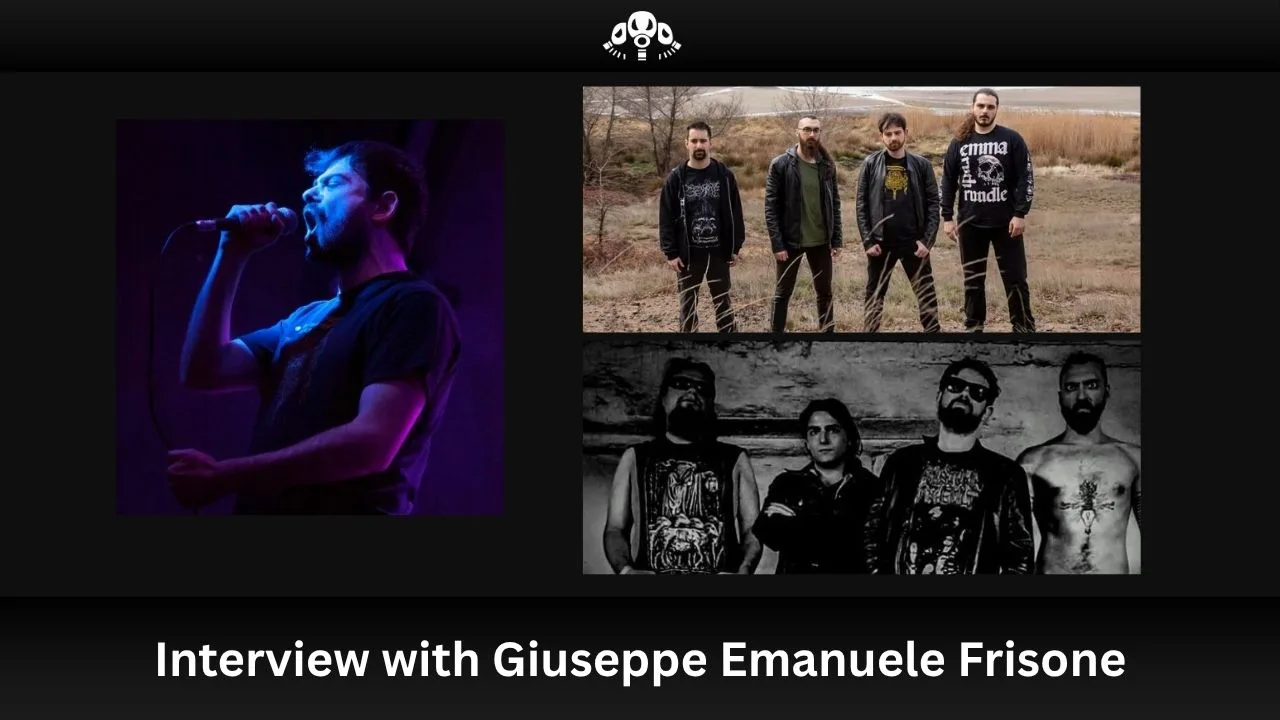

FAYNKAOS: Hello Giuseppe, it is a pleasure to finally meet you in person and get to know you better. How are you doing right now?
GIUSEPPE: Hi, thanks for the invitation. I’m doing fine, enjoying summer in Finland, keeping busy with music and day job, going to live gigs, and so on. I’m also currently talking with some labels about releasing an album with a new project I have with Jacopo Gianmaria Pepe from Rome-based progressive rock/death metal band Bedsore.
FAYNKAOS: As a Metal singer and songwriter, you’ve been and still are active in multiple bands and projects. When and how did you start your musical journey?
G.E.F: My first experiences in extreme metal date back as early as 2011, where my interest in black metal reached a level that convinced me I should try to express myself in a musical form. In that period, I joined a Depressive Black Metal project as a Bass player for a few months, then left due to incompatibility with the other members, and also probably because depressive black metal never was my thing, after all. In the same year, I formed Veia, which is my oldest project, even if it was put to rest pretty soon because I didn’t have enough knowledge or equipment to record my stuff.
A more « serious » approach to black and death metal started around 2016-2017: it was in that period that fruitful collaborations and my other projects/bands started to take form.
FAYNKAOS: Recently I have listened to your 3 Extreme Metal projects/bands: Clactonian, Veia and Thecodontion, and even though you already summarized me the whole thing, I would still catch myself discovering more details, and I guess the common point between your projects is the « primitive » aspect, pre-Christian, Paleolithic and rustic, and mainly the Etruscan history and heritage which is a personal passion I have, let’s say, and one of the reason’s that got me into your music. Where did your interest in the Etruscan civilisation come from?
G.E.F: Well, first of all, let’s say that Thecodontion and Clactonian are somewhat connected, but Veia was born many years before, so the approach is different, even if you might notice some common threads. Anyway, my interest in Etruscans came quite naturally since I grew up in central Italy, surrounded by traces of Etruscan presence: tombs, museums, toponyms, and mythology. And yet, they remain a mysterious and underrepresented culture in the metal underground, compared to, let’ say, Vikings or ancient Greeks. With Veia, I wanted to explore that dimension in a way that felt serious, personal, and stylistically grounded in '90s Black Metal.
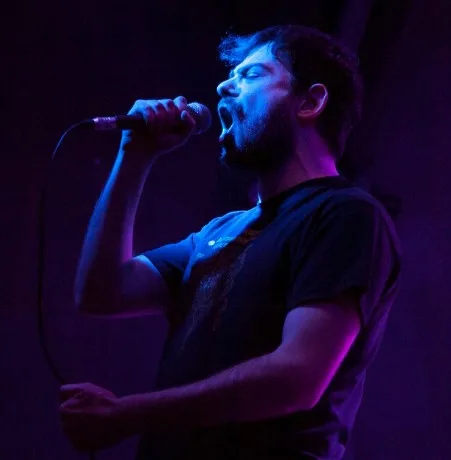
FAYNKAOS: I have one more curiosity, let’s say when it comes to the prehistoric era or ancient times in general, as a music theme, we find it associated with Black Metal, and very, very rarely with Death Metal. I can think about Sinner’s Serenade by Eternal Tears of Sorrow as a Death Metal album, talking about the primitive aspect of the human kind, with an album cover representing prehistoric arts drawn on the walls of some cave in Minnesota, according to my research. And apart from that, I have never seen that anywhere else until discovering your music. Why Death Metal, and not just the « Pagan/Epic Black Metal » cliché?
G.E.F: I’ll be honest, I’m more of a Black Metal guy than a Death Metal one. But at the same time, I’m not much into Melodic, uplifting, modern Black Metal bands like certain trendy things. I prefer my Extreme Metal raw, obscure, yet uncanny and uncomfortable at the same time. Extreme music must « speak » to me, I’m not looking for a way to please the listener: it’s research, like digging deep into our remote past, and for that purpose I need Extreme and unpolished sounds.
All of my prehistoric-themed projects do fuse Black and Death Metal to some degree. You’ll find traces of Black Metal in Thecodontion and Sunken Monolith, and I think the Black Metal element is even prevalent when it comes to Clactonian. The same reasoning also applies to Veia, which is almost entirely a Black Metal project. But to answer your question specifically: even though there are several Epic and Pagan Black Metal bands I like, it’s because I see prehistory not as a romantic or just mythological age, but as something violent, raw, and deeply alien to our modern sensibilities. Black/Death or even War metal (when stripped down) reflect that better than polished Pagan metal ever could. There’s no nostalgia in what I write, just a desire to evoke the brutality and mystery of early humankind.
FAYNKAOS: Good to know it’s rather rooted in Black Metal, despite the harsh and aggressive low tuning aspect it gives, even as a first impression. Anyways, one of your Death Metal projects has an extra particularity, though, all the riffs of Thecodontion consist of the exclusive use of bass, no guitar at all! Why and how did you decide to give that privilege to the bass, knowing that it’s an instrument often put in the shade?
G.E.F: That was one of the founding concepts of the band. I always wanted to play some Extreme Metal with bass only instead of guitars: the first idea came in 2012, even if Thecodontion was founded years later. I have always been fascinated with some 90’s Black Metal bands which used bass almost as a lead instrument (thinking of Necromantia, early Barathrum or Mortuary Drape in their album « Tolling 13 Knell »). That idea wasn’t about being “experimental” for the sake of it, but about achieving a heavier, deeper sound that fits the archaic imagery we were trying to evoke: in the case of Thecodontion, geological eras, prehistoric animals, things rooted in the earth. Bass gave us that weight. Over time, we developed a language around it.
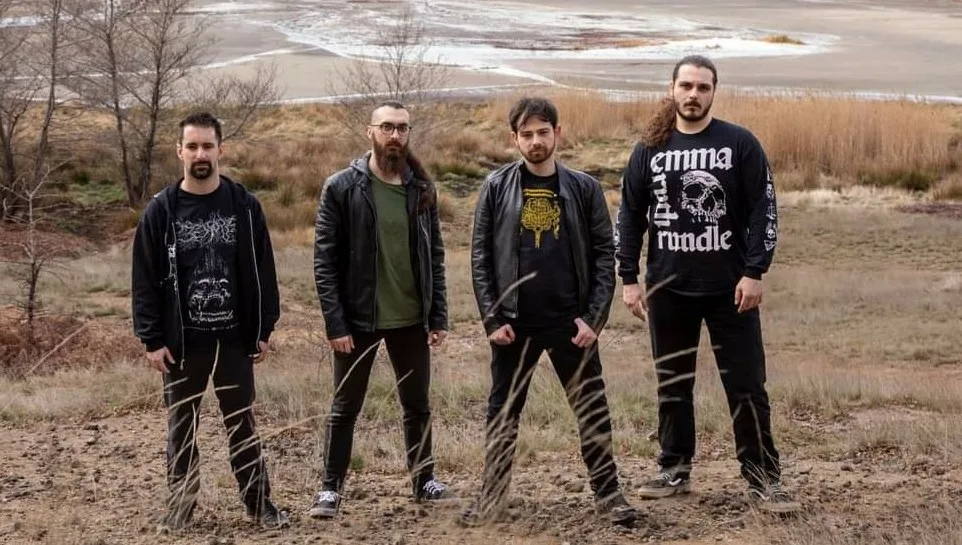
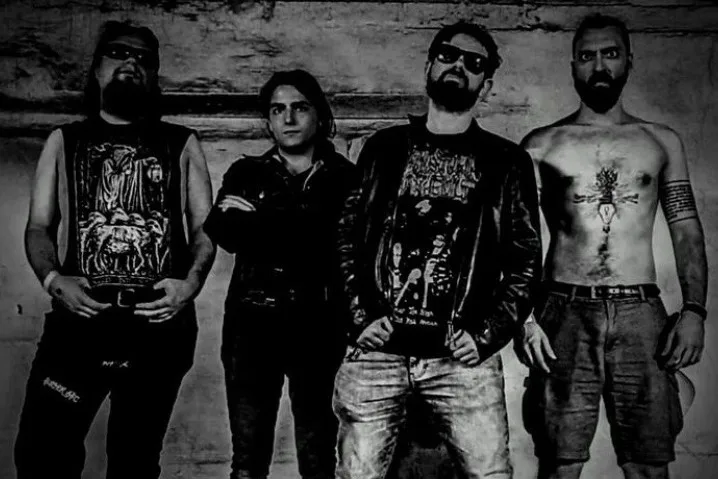
FAYNKAOS: You’re Italian, and surprisingly, from Rome, the eternal city, but you are based in Helsinki, Finland. Did music, and Metal in particular, influence your choice to settle in Finland? I think I’m needless to explain the importance and power of the Finnish Metal scene.
G.E.F: There were many reasons behind my decision, but partly, yes. I had been coming to Finland for years before settling here (mostly for personal reasons), but the strength and openness of the Finnish underground helped confirm the decision. There’s a real sense of artistic freedom, especially in Black and Death Metal. Additionally, last year with Thecodontion we played three shows in Finland, precisely in Helsinki, Tampere and Jyväskylä, and the reaction was amazing: that experience also played a role in my choice.
FAYNKAOS: remaining in Rome, have you ever been involved in the Roman Metal scene, and regardless, how would you evaluate the evolution of Metal in Rome?
G.E.F: Yes, I’ve been involved in the Roman scene for a long time, especially through Thecodontion and shows at Traffic and other venues. There’s always been a core of truly dedicated people, good bands of any kind and many shows, even though I feel like some genres are a bit underrepresented in terms of local bands. Plus, you can find great promoters who work very hard, like my friend Tito Vespasiani from Death Over Rome Bookings. Overall, I think the situation isn’t bad, especially if we compare it to other areas in Italy.
FAYNKAOS: Recently, you released the Sunken Monolith Demo tape under the label Prehistoric Sounds. How is the audience feedback so far?
G.E.F: Yes, it was a co-release between my label Prehistoric Sounds and Italian label Unholy Dungeon Tapes. The Demo came out on July 4th, and so far the response has been small but positive, especially considering it’s a new project. It’s more obscure and dissonant than my other bands, so I didn’t expect it to appeal to everyone. But those who get it really seem to connect with the sound and the imagery, composed of Neolithic spirituality, archaeomythology, and archaic symbolism. I’m currently writing new material, and it will take time, but I’m on track.
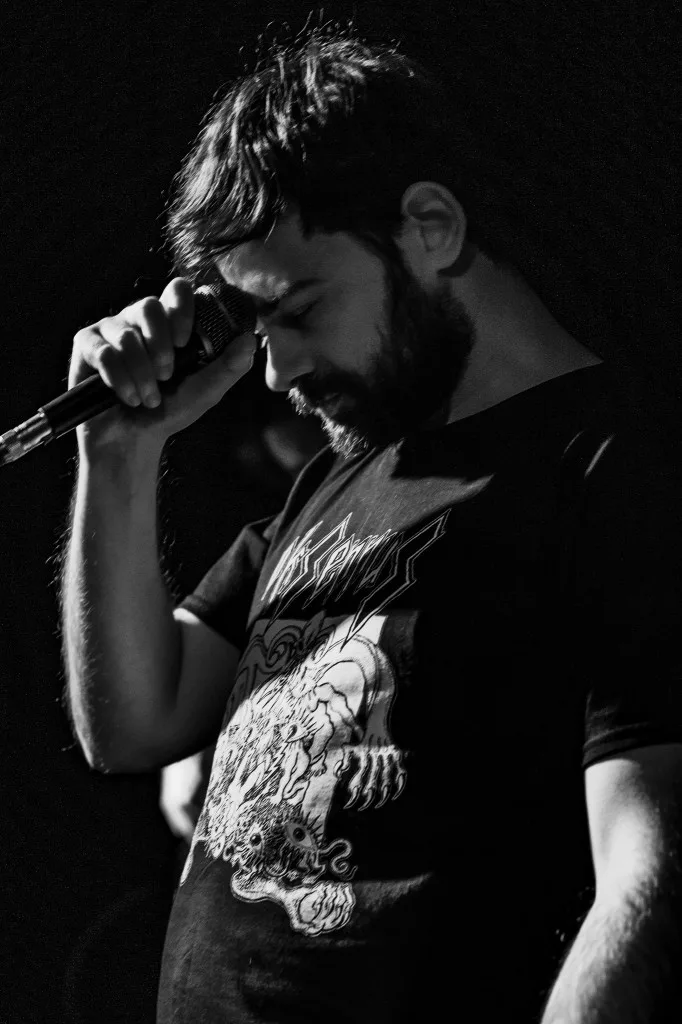
FAYNKAOS: Do you have any current Finnish Metal bands that you consider the best? Otherwise, are there any Finnish Metal bands that inspired you to do what you’re doing today?
G.E.F: There are too many to name, but the first one to come to mind is mighty Beherit. They are one of my favourite bands, and I also had the honour of interviewing their frontman, Nuclear Holocausto Vengeance, for Aristocrazia Webzine, an Italian webzine I write for.
Other great bands are very well known today, like Horna or Sargeist in black metal, and Demilich or Demigod for death metal. Still, my focus is more on underground Finnish Black Metal bands, for example, I extremely admire stuff like Barathrum, Ride for Revenge, Venus Star, Witchcraft and their side projects Necromonarchia, Daemonum and Moonfall, especially, and more recently Regere Sinister, who released my favourite album of 2024, « Inside the Eye of the Horned Winds ». Then I could mention Hail, Death Citadel… there are many.
Finland has always had a unique approach to Black and Death Metal: primitive but not derivative, weird but sincere. That spirit had a strong influence on Clactonian.
FAYNKAOS: Thank you so much, Giuseppe, for granting us the opportunity to interview you. Last but not least, a word you would like to leave for our readers.
G.E.F: Thank you for the thoughtful questions. If anyone wants to dig deeper, you can find my bands here :
- Thecodontion: https://thecodontion.bandcamp.com/
- Clactonian: https://clactonian.bandcamp.com/
- Sunken Monolith: https://sunkenmonolith.bandcamp.com/
- Veia : https://veia.bandcamp.com/
- Prehistoric Sounds: https://prehistoricsounds.bandcamp.com/
...and of course, you can find most of these projects on all social media platforms like Facebook or Instagram. I think all is on Spotify and the other streaming platforms, even though I encourage people to purchase from Bandcamp, whether in physical or digital format.
Stay primitive!
Related Articles
Necrot Interview With Luca Indrio
Chat With Bill Pincins From Ritual Sacrifice
Thysia Interview With Nefasto
Comments
No comments yet.