
Internal Bleeding Interview With Chris Pervelis
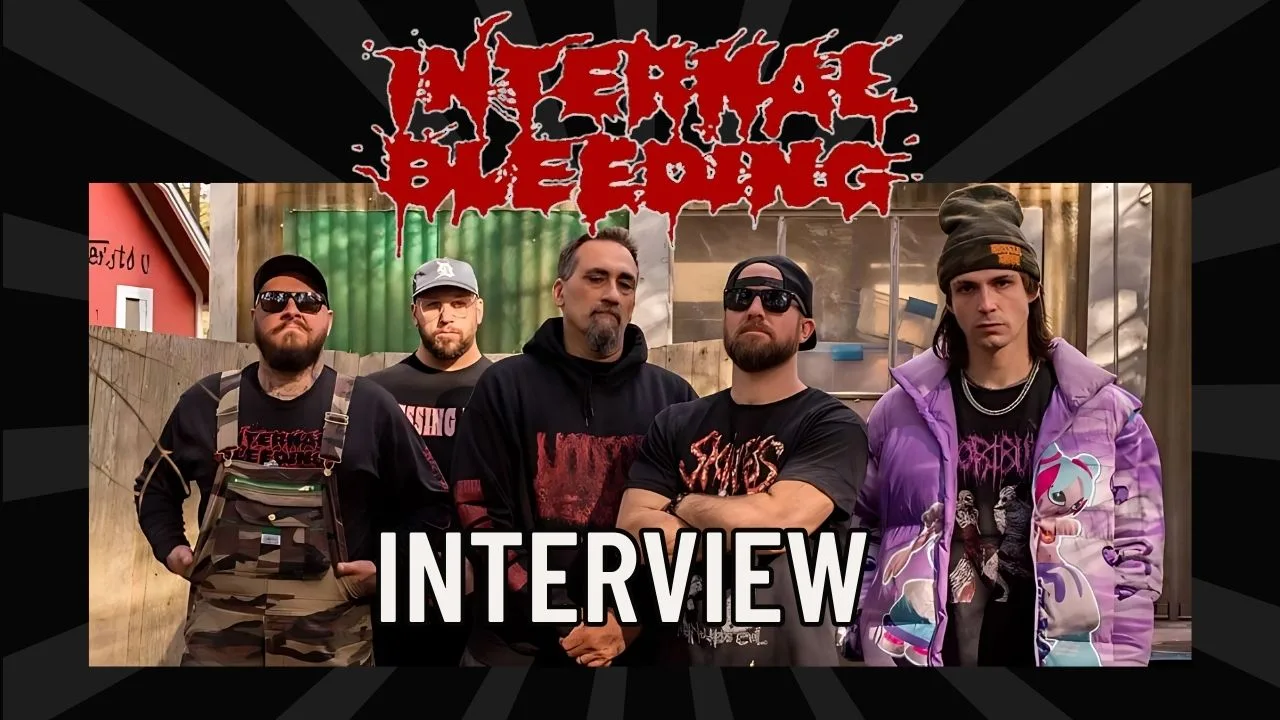

I have known Chris Pervelis for what seems like forever and his band Internal Bleeding is still going strong I thought it would be fun to pick his brain about his band's career over the past 30 years and then some..
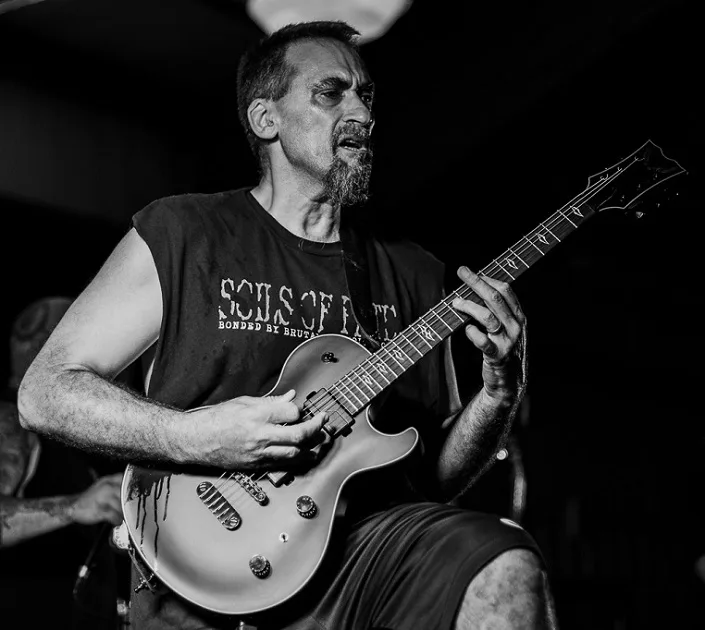
Where were you born and where did you grow up? What sort of kid were you growing up?
CP: I was born at New York Hospital on April 27th, 1968. My mother used to jokingly remind me that she was in labour for nine hours, and I was the heaviest kid in the nursery. My father said he spent most of his time at the bar across the street or on the front lawn of the hospital smoking Marlboros (dads weren’t in delivery rooms back then). I spent about a year in Queens, New York, and then my parents moved to Long Island, where I spent most of my childhood. I had a small stint in Kentucky when my dad moved there for business.
I would consider Long Island my home since I have spent most of my life here. I am very fortunate to have had a great childhood. My parents loved me, I had a lot of friends, and all my neighbours were just an extension of my family. I felt very safe and accepted and had a great time as a child and teenager.
Thinking about it now, I guess I was pretty complicated. I feel sorry for my parents because a lot of the time, they didn’t know what to do with me. My mom and dad were very strait-laced, and I was creative, headstrong, and always running against the grain. Additionally, I was always looking for adventure, which got me in a lot of trouble with my parents, neighbours, and sometimes the law. Times were different back then, so when I did something terrible, a cop would bring me to my house, tell my parents what I did wrong, and leave it at that. My face still hurts from the hurricane of slaps my mom and dad assaulted me with — good times!
On the other hand, when I was young, I did very well in school and buried my head in books, reading about military history, science, and politics. I remember being very young and discussing the Constitution, military history, and whether the technology in’ Star Trek’ was possible with my father. Ugh, I miss my dad. He was a great man.
I went through a small phase of drug use in 8th grade, but I was not too fond of the fact that it clouded my vision and distorted reality, so I swore myself off drugs. Funny, the best grades I ever got in school were when I was so high I barely knew what was going on. I had a straight 98 average in 8th grade— Honor Roll, etc. It’s ridiculous to think about.
My life changed dramatically in high school. I discovered muscle cars, which destroyed my grades and caused a lot of friction in my family. I spent most of my time working on cars, racing, and getting into trouble street racing. I guess I also discovered girls in high school, but I was painfully shy around them, so I had few girlfriends. I was a bit of a loner with a small pack of friends.
College completely changed my life. In college, I learned how to embrace who I was and discovered what I wanted to do with my life. It was a thrilling time because I think the people around me accepted me for who I was, and my parents finally realized that I was going to be ok, even though they may not have understood me entirely.
What did you want to be when you were growing up?
CP: The usual stuff a kid from the 70s wanted to be. At first, I wanted to be an “army man,” then I wanted to be an astronaut and a fireman, and then, of course, I wanted to be Captain Kirk from Star Trek. Interestingly, I always wanted to be an “Ad Man,” even though I had no clue what that was. When I was young, I spent a lot of time writing advertisements for companies I would invent. I would design the advertisements, the logos, etc., and write the ad copy for the company. Only in college, when my drawing teacher saw one of the ads I doodled in my sketchbook and said, “You know people do that for a living,” did I realize my calling was in advertising. I am sure many old-school metalheads reading this can remember all the IB flyers I put out, filled with catchy slogans, etc.
When did you discover heavy metal music? What were some of the early bands you heard and liked? Do you still like those bands today?
CP: Age four, 1972. I heard Black Sabbath for the first time. It completely changed my life. My older sister was playing the “Paranoid” album in her bedroom, and I remember hearing the opening of Iron Man. I was mesmerized. I ran into her room and asked what that was. Hearing that for the first time connected with me in some way that I cannot describe. It was scary, thrilling, and life-affirming all at once. I remember staring at the gatefold picture and wanting to know everything about these guys: Why were they wearing giant crosses? Why were they in this grassy field? And who was that weird guy with the sword on the album cover? It was all downhill from there.
After that, there were Blue Cheer, Cream, Hendrix, Black Widow, and other bands, but none were Sabbath. I knew the “sound” I liked, but metal wasn’t very defined back then. Maiden came along in 1980, and I remember liking them, but it wasn’t quite the sound I was looking for. I loved the imagery, but it wasn’t ‘heavy’ or ‘hard.’ I think I discovered Iron Butterfly and Blue Oyster Cult around the same time, and that was more to my liking, but still, it was missing something. Judas Priest was in the mix, too, but something was missing.
In the very early 80s, hardcore caught my ears. Bands such as Agnostic Front and Black Flag may not have had the heaviness of Black Sabbath, but they had that rhythm, groove, and unhappiness that connected with me and kept me going for a while.
Then, around 1983 (I think my memory isn’t perfect), I heard bands like Slayer and Metallica for the first time. Now, here was something I could relate to. It had all the rage of Black Flag with the darkness of Black Sabbath, so it hit my sweet spot.
From there, it was all back and forth between hardcore and metal bands. It’s still that way, but now add fusion Jazz and other types of music to the list of things I love to listen to.
I still listen to the music that shaped me when I was younger; Sabbath will always be my favourite band. I still love Blue Cheer, Blue Oyster Cult, and Jimi Hendrix, and I listen to Slayer and early Metallica. Sometimes, I’ll listen to Destruction and Sodom, but bands like that have lost their timelessness for me. Not sure why.
How about underground music? What were some of the early bands you heard? Did you get into it right away or did it take a few spins to get into it? Are you still a fan of these bands today?
CP: I believe my first exposure to it was the Raging Death compilation, which my vocalist at the time (who later became an IB vocalist) had a dub of. I got into it quickly and liked Find the Arise by Xecutioner and Kill Team by Sadus. From there, he showed me the world of tape trading, demos, etc, and I dove in with both feet. I amassed many demos from across the globe, including Cannibal Corpse, Malevolent Creation, Asphyx, Bolt Thrower etc. It was like I was handed the keys to an entirely new world.
I’m still a fan of some of these bands. I often listen to Asphyx and Bolt Thrower. Xecutioner, which is now Obituary, still gets plenty of listens. I lost my taste for Sadus, as thrash and brutal thrash no longer hold my interest. I still listen to all the Buffalo/Florida regulars on occasion.
So what led to you picking up a guitar? Self-taught or did you take any lessons? Who are your favourite guitar players?
CP: Black Sabbath instantly made me want to pick up the guitar. I tried to make the same sounds they did. I pretended to play guitar in front of a mirror while listening to Black Sabbath. Around 8th grade, I found a guitar in a sump (like a large drainage ditch) and a reel-to-reel recorder in the trash. I procured a patch cord and managed to get sound to come out of the reel-to-reel, and that was the first time I ever plugged in a guitar. From there, I learned how to tune it and then learned how to play “Black Sabbath” by Black Sabbath.
I saved my money, bought a cheap used Squire Bullet and a small practice amp, and began taking lessons. I got frustrated quickly, and I think I put the guitar down at the end of 8th grade. By 11th grade, the itch was back, and I got back into things. I formed my first band in 11th grade, called Politically Incorrect. We never went anywhere or played shows, but sitting down with someone and writing music was a lot of fun.
I became very serious about guitar towards the end of college, and that’s when it all came together. I dedicated a great deal of time to the instrument and decided to get serious about being in a band.
Now what are some early shows you saw and how crazy were they back then?
CP: I’ve been lucky enough to see a lot of really cool shows; there are almost too many to list! If I had to pick five, it would be these:
Black Flag at Irving Plaza in 1986 was probably the most violent show I attended. I left that show entirely battered and bruised. I remember Venom was playing at the Ritz the same day, and Henry Rollins was completely ripping on them. I got him back by accidentally kicking him in the face while crowd surfing, and consequently, he yelled at me, which was hilarious.
Slayer, Motorhead, and Overkill at the Agora Ballroom in Hartford, CT, in 1998; that was a wild show, partly because I was utterly blitzed out of my mind. I was in college at the time, at the University of Bridgeport, and on the ride to Hartford, we just drank an ungodly amount of beer. I have no clue how we even got home from that show.
Morbid Angel, Immolation and Revenant in 1998 at Sundance on Long Island was another classic show. I met many great people there, many of whom I am still friends with, even though they really aren’t into music anymore.
The Hangman’s Ball at the Ritz in 1992 (?) was excellent. The bill was a who’s who of underground bands like Grave, Asphyx, Gorguts, Cannibal Corpse, Brutal Truth, Ripping Corpse, and many others.
I’m adding this show, even though it wasn’t an underground show: Aerosmith, Guns and Roses, and Deep Purple at the Meadowlands. I don’t remember the date, but I have to admit, Guns and Roses were raw and raucous, and Deep Purple was so fucking heavy that they made Aerosmith look like a joke.
Underground shows back then were completely wild. I was glad to be a part of it. I am pretty confident the reason my knees, shoulders, and neck are so fucked up is because of these shows. I was always in the pit, trying to get close to the action. I am paying for it now, unfortunately…or fortunately. It depends on what day it is, hahahah.
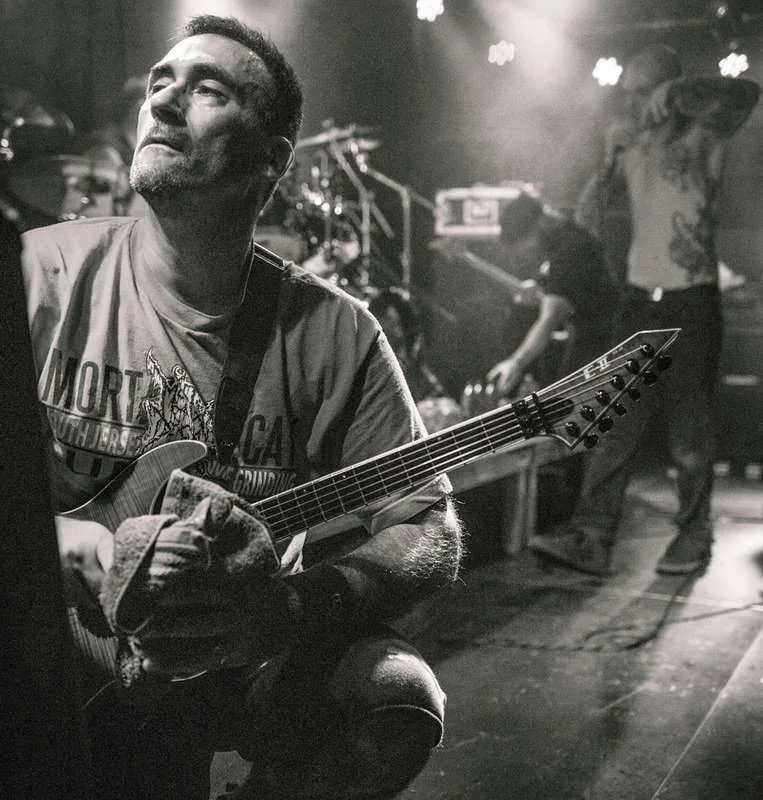
Now, around what time did you decide to start up a band or join one?
CP: As I mentioned before, I started a band called Political Incorrect in high school; I think that was around 1985, so that was the first time I decided I wanted to be in a band. That stupid little band cemented in my mind that I wanted to play in a band and create music in some form or another, and that began a small string of bands until I put Internal Bleeding together.
In college, I put down the guitar and became a vocalist for a band called GBA (Guilt By Association). That was great fun because we were completely out of control and would assault audiences when we played. The band was a hardcore/punk mix, and we played a lot of campus parties, battle of the band contests, etc — Fun times, jumping on tables, throwing things at people, etc.
After college, I continued GBA with the guitarist (since we lived down the road from each other), but that didn’t last long because I wanted to play metal. Here is a funny story about that: the drummer at the time was my high school friend, Andrew Sussman; he moved to Kansas shortly after GBA broke up. About 2011, I was playing a show with Origin, and John Longstreth approached me and asked me if I knew a guy named Andrew Sussman. It’s a small world. It Turns out John used to work for Andrew at Lenscrafters in Kansas, and my name came up. I am always amazed at how small the world is.
My first serious metal bands, Autumn Reign and Internal Bleeding, came after GBA.
Now, what led to the starting up of Internal Bleeding?
CP: Autumn Reign was a weird blend of Sabbath, Danzig, and death metal. I kept pushing the band into more of a death metal realm and broke it up because it wasn’t working anymore; it became confusing, and there were just too many disagreements.
Then, I realized I wanted to play Death Metal, and I think I started writing the first IB song shortly after that. Once I had the idea and 3/4 of a song done, it was a pretty long slog trying to find like-minded musicians, and it took a while to get a full band together where everyone clicked. I went through many people initially until I landed on what I guess you would call the ‘original’ lineup of me, Eric Wingger, John Colucco, Anthony Miola, and Bill Tolley.
Who came up with the name and the logo of the band? How many names were thrown around before you came up with Internal Bleeding?
CP: I came up with the nam sitting in my father’s darkroom while smoking a cigarette and developing some photos I had taken. The name just popped into my head; honestly, I put no thought into coming up with the name. I liked Internal Bleeding because it was catchy and descriptive of the heaviness I wanted to try to achieve. I didn’t have any actual members in the band at the time (although I was jamming with a few people trying to get the band together), so there was no discussion about a band name.
A few days after I came up with the name, I went to work and printed a bunch of sheets with ‘INTERNAL BLEEDING’ in Helvetica Extra Bold font. I then began decorating the font with a blood-spatter effect with a Flair felt-tipped pen. After three or four tries, I came up with something that I believed was legible and looked cool.
So now, what were the early practices like, if you remember? Did you screw around with any cover tunes,s or was it originals from the start?
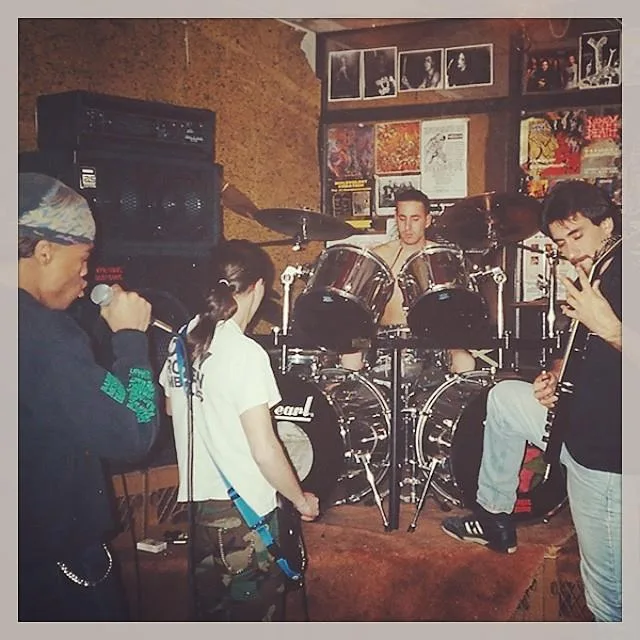
CP: Our earliest practices took place in my parents’ basement; they weren’t too happy about it, but thankfully, they dealt with it. None of us knew any complete songs from other bands, but we spent a great deal of time playing riffs from bands we enjoyed. The number of times we played the opening riff from “Pull the Plug” or the main riff from “NIB” was absurd. Additionally, even if we were working on new material, Anthony Miola would usually play a riff from another band when the song we were working on had a pause or a break. It became kind of a joke as to who would come up with the best riff from another band to plug into one of our song’s pauses.
When I had a stable lineup together (after jamming with a bunch of people who never seemed to work out), I already had two songs (Invocation of Evil and Genocide) wholly written, so we played and tinkered with them until we thought they were decent. Once we were happy with these songs, things became exciting because Anthony and even Bill (Tolley, drummer) would come down to practice with riffs and ideas. Things took off from there, and I think we all felt we had finally become a real band, sharing ideas, encouraging each other, and working on ideas together.
It was indeed an exciting time.
Now, at what point did you think it was time to gointon the studio to record a demo? I know you knew about the underground, but did you know about the other side of it, the fanzines and college radio stations and underground record stores that were around at the time?
CP: The impetus behind our first demo came about when our ‘roadie,’ a guy named Pete (last name withheld), had ‘liberated’ a bunch of cassette tapes from Hofstra University. He came down to practice with about 100 cassettes filled with law lectures. That hatched an idea to do a four-track recording and then transfer them to these ‘found’ cassettes.
I set up a few microphones in our jam room, which at the time was under a pizza parlour in Mineola, New York, and we just played the songs we had. Once we got some takes that we were somewhat satisfied with, I began erasing the cassettes and duping the live recording onto them.
I am not sure how many we made; I think about 100 or so, and while I was well aware of tape trading, etc., I wanted to use this rehearsal tape locally to get our name out. We thought the quality was so bad that we sold them for only a dollar, so the demo was called “The One Dollar Demo.” We used the catchphrase “Barbarity for a Buck.”
We knew of the more expansive tape-trading underground, college radio, etc., but we didn’t want this recording to represent Internal Bleeding worldwide. We sold a few through underground channels, but most were sold locally.
I listen to that recording now, and I am embarrassed as hell, but times were different then. There was no digital technology, and we were all tight for money, so we had to improvise, and this is what we came up with. I laid out the J-card on my Mac Classic, printed them out at work, folded them, etc., and so began our illustrious recording career, hahaha.
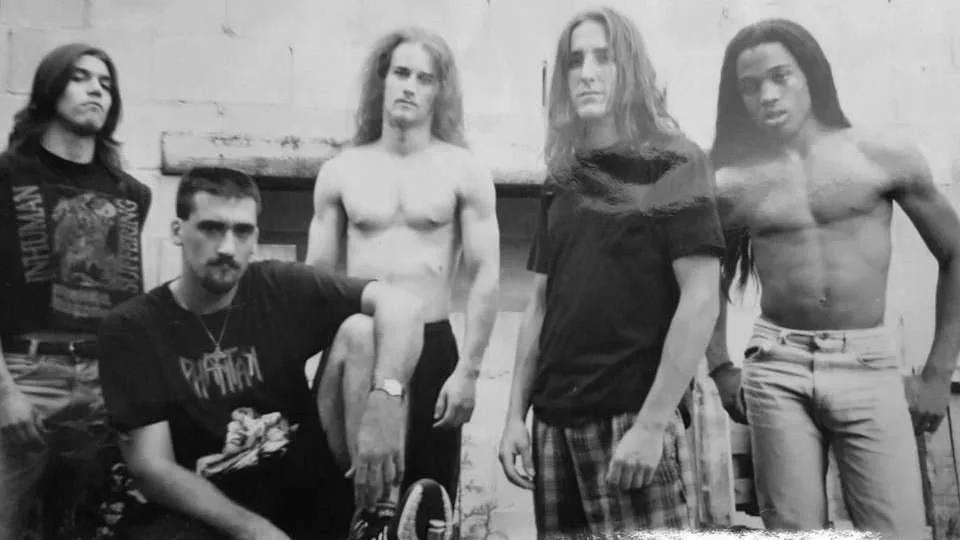
Did you go to Slipped Disc a lot early on or Bleeker Bob's early on when the band was in its demo days?
CP: Absolutely! Either Saturday or Sunday afternoon, I would get in my blue Toyota, usually with Bill in tow, and we’d trek out to Slipped Disc. I have such fond memories of that place. The owner, Mike Shutzmann (pardon the misspelling), was very knowledgeable about all the great new releases and truly supported local underground bands. You could find demos from bands across Long Island, New Jersey, and the tri-state area in his store. He also got to know his customers pretty well, and when I’d walk in, he’d point me in the right direction, and I’d always find a gem to go home with and crank in my car. Later on, when our first album came out, he went out of his way to do displays and promotions for us—a great guy.
I didn’t get into the city much, but Bleeker Bob’s was always a mandatory stop when I went to shows. Funny, they had a lot of excellent metal stuff there, but they also had a lot of obscure hardcore, which was booming in the NYC area at the time. At Bleeker’s, I mainly bought hardcore tapes and 7 inches that I couldn’t find on Long Island.
Even though it is not from the demo days, I have to mention None of the Above Records owned by Brett Clarin from the Band Sorrow. His store was nothing but underground music — everything from techno to noise, to super obscure metal, hip hop—you name it. He was ahead of his time and curated an incredible collection of music for the store. I was fortunate enough to work there on weekends and had an absolute blast—one of the best times of my life. I have so many great stories from working there. Brett is a great guy and a truly good human being.
What was your debut show like? Where was it and who did you play with? How nervous were you guys before the show?
CP: Our debut show was quite an odd affair. I am unsure how we ended up on the bill, but it was a ‘battle of the bands’ show with about ten other bands. The show took place at a club called Hammerhedz, and it was put on by some label called New Egypt Records or something along those lines. The winner was supposed to get free recording time, so we decided to do that show and try to win the recording time. The bill was a mixed bag of rock bands, 80s-type electronic bands, and a few alternative rock bands. We were the odd man out because there were no death metal or metal bands on the bill.
I think everyone was pretty relaxed when we went on stage, and we were all resigned to the fact that absolutely no one there would like us. We ripped through two songs, and the crowd’s reaction was stunned silence. I don’t think these people heard of extreme metal before. By the end of the show, we received a smattering of applause. I guess some people appreciated what we did because we did sell a bunch of our One Dollar Demo tapes.
Needless to say, we didn’t win the contest.
You mentioned None of the Above Records and stories you had. Please share some.
CP: I don’t quite remember the years I worked there. It was after our first album, so I would guess it was around 1996-1998. I worked there part-time on Saturdays and Sundays when I wasn’t working my regular 9-5 job. I took the job because I knew Brett, a massive supporter of IB and an overall great guy.
Most of the time, I was partnered with another guy named Chris or Sean Bell (who did merch for us on our first tour). Saturdays and Sundays were an absolute blast because the store was always filled with metalheads looking for new and latest stuff, so there would always be heated roundtable discussions going on throughout the day about which bands are excellent, which bands suck, etc. Those roundtables were always the highlight of my day because some of these discussions turned into outright yelling matches. Fortunately, no one took it personally.
Sometimes, I would spring for a few pizzas and let people who walked in have a free slice; it created a bond between the customers and the store.
The store was also a boon for me in the ladies' department; I met and dated many girls who frequented the store. Nothing ever panned out with any of them, but I certainly had a blast and gained a lot of great memories.
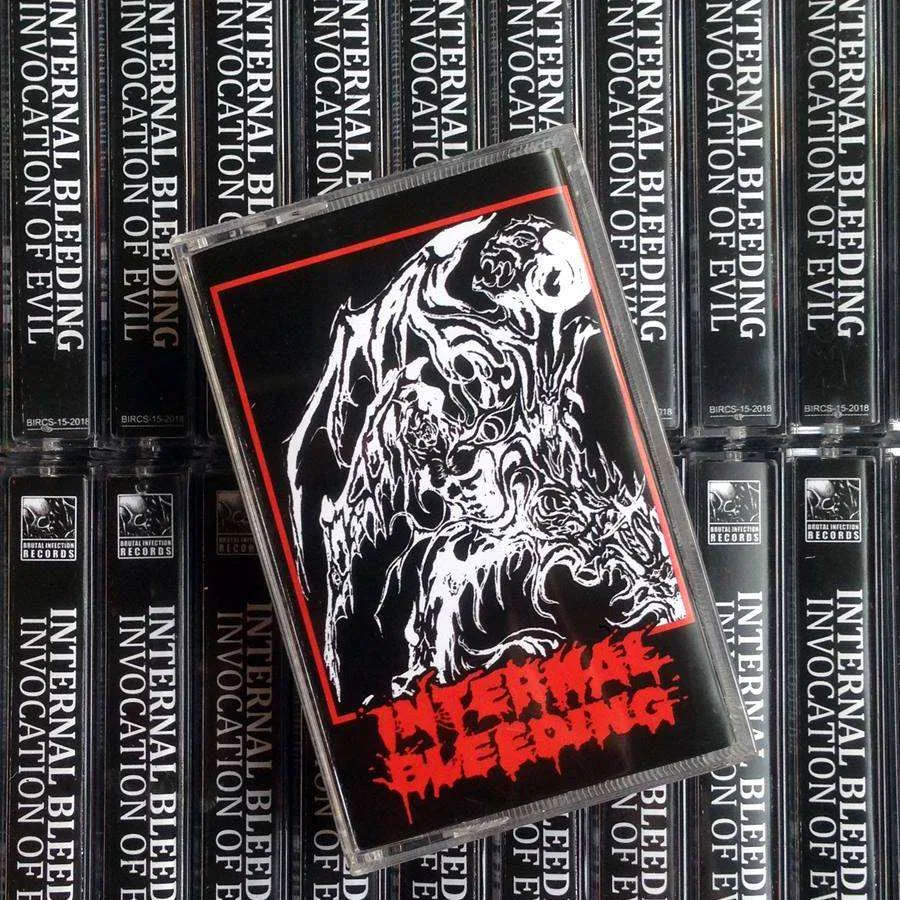
Now when did you decide to go in to record your "Invocation of Evil" demo? Do you kind of consider this to be your 1st official demo?
CP: I believe we decided to do an actual recording right after we had four or five songs put together and we were satisfied with how we played them. Legend Studios was the place to go, so once we saved up the money, we booked time there and dove head first into recording.
Looking back, recording that demo was one hell of a great experience. I remember being so nervous the morning of recording that I played the songs over and over again, afraid that I was going to fuck up something. I was in my parent’s house and they didn’t appreciate me cranking my amp at 7:00 am, ripping through the songs.
Everything went by in a flash. We set up our stuff, and the engineer, Bob Vandermark spent about 8 minutes dialling in the guitar and drum and sounds and off we went. All the instruments were recorded live in just a few takes. I think we spent a total of an hour getting all the music onto tape. Then we spent about 20 mins on overdubs/punchins.
A couple of days later, Wallace came in and did his vocals. We had Darryl from Pyrexia slated to do backing vocals, but he backed out on us, so Bill Tolley did the backing vocals.
Before we knew it, we had a mix and a DAT tape. We borrowed 600 bucks from Bill’s dad to have the first set of cassettes made.
I consider this our first ‘official’ demo. As I said earlier, the One Dollar Demo was an embarrassing affair, and I’d rather forget it exists.
With this new demo out, did it start to open a lot of doors for you? Did you send it out to a lot of zines and stuff,f and did you start to play some shows?
CP: Once the demo came out, we were incredibly aggressive in promoting it. I sent out many copies to fanzines all over the world. The first zine to respond to me was Under the Corpse, run by Wayne Klinger. He loved the demo and helped promote us to other zines and throughout the underground.
Also, at this time, we got a fortunate break at a new club here on Long Island called the Roxy. The owner, Frank Cariola, took a real liking to us and put us on bills with major national acts whenever they came through. There was no pay-to-play back then, which was fantastic. All Frank cared about was if you could bring people in, and we did. At first, it was a small group of friends, but after a few shows, we picked up many fans and brought many people from NY, NJ, CT, and surrounding areas into the club. Frank also made sure to thank us and pay us pretty damn well.
Word spread quickly. It didn’t take long for my mailbox to be filled with demo orders, fanzine requests, etc. Between the mail orders and the shows we were playing, the demos were sold out in a short period.
Finally, when the demo came out, we played our first out-of-state show in Wilkes Barre, PA, with a band called Ossuary. We had a total blast, and the show was outrageously wild. We became good friends with them, and I am still in touch with some of the guys from the band.
In 19,94, you hooked up with Wild Rags and released "Perpetual Degradation". That release was all over the underground; your ads were everywhere. Were you playing a ton of shows at the time? What happened with Wallace?
CP: We hooked up with Wild Rags in April or May 1993. Richard C. had bought a bunch of Invocation of Evil tapes, and we went right into discussions about licensing cassettes and MCDs not long after that. Invocation of Evil was re-released by Wild Rags in August of 1993.
I don’t remember when Richard C. hatched the idea to do an exclusive Wild Rags release, but he suggested that our next release should be with him. He had proven to be a great partner to work wit,h and we all trusted him, so we thought it would be a great idea. All we had to do was shell out for the record, ng, and he’d do the rest.
We were writing songs quickly back then because we were jamming 3 to 4 times a week, and it wasn’t long until we had a new set of songs (plus one or two that we threw away) ready to record.
I don’t remember the date, but we headed back to Legend Studios to record what became Perpetual Degradation. We used a different producer this time, and he got us a much heavier sound, which pleased us. Additionally, we had refined our style more and went even further when it came to emphasizing the groove and heavy aspects of the band. We felt that we had some killer songs that fused death metal, hip hop, hardcore and Black Sabbath together.
When it came to vocals, however, Wallace just wasn’t up to par. He didn’t put in the work, and his output wasn’t up to the level we expected from him. We had explained to him how the vocal patterns needed to groove along with the music, but he just didn’t listen, and the tracks he laid down made things sound disjointed.
I remember being upset, and a lot of phone calls between Bill, Anthony and Brian made us realize that Wallace had to go. He was fired about a week after he did his vocal tracks. To this day, it was one of the worst things I had to contend with because I didn’t want him to go.
That certainly left us in a bind as the recording was just about finished, and Legend Studios wanted to close out the session, and Richard was hungry for the release.
Now you were down to a four piece as you did some vocals as well as Bill Toley on this release. Were you looking for a lead singer and just couldn't find someone, so you both shared the vocal duties?
CP: After we got rid of Wallace, Bill said he’d do the vocals. He always had a pretty killer and unique voice, so we all thought, “Why not? ”I re-wrote all thelyricsc., I spent about a week holed up in my bedroom going over all the songs, the lyrics, patterns, flow and phrasing. He got into the studio and nailed what we all wanted. His voice was heavy but understandable and unique.
I didn’t really ’share’ vocal duties with him. I did some backing vocals on Perpetual Degradation, but that’s about it as far as my vocal contributions go. It was Billy who saved the release so we could get it out there while there was still a lot of hype for us from the last demo.
Was it around this time that you guys and Symphony of Grief, who I managed at the time, did the mini tour that ended up with us playing the Milwaukee Metalfest?
CP: It was a little after Perpetual was released, and we got Frank Rini in the band. I don’t remember how that all transpired, but I think you asked us if we wanted to do a run out to the metal fest since we were doing it,t and I think you booked everything. I certainly didn’t…or at least I think I didn’t. (I probably ended up doing it then. It was a blast that’s for sure, Chris)
That was a fun little r, un, and we had some awesome shows on our way out there. One of the shows was in a Pizza Parlor in Rockford, Illinois, and it was wild as hell.
Any idea what sales were? Did he try and keep you on the label for your next release? Did you know as a band, it was time to move on from him? Did you ever get to meet him? I saw it got re-released in a box set limited to 100 copies, is that the only time it got re-issued?
For Invocation of Evil, sales topped out at about 8,000 copies. With Perpetual Degradation, I stopped keeping count after we surpassed 3000 copies because we were focused on more pressing things.
Richard C. and the band knew we had to move to a more prominent label because he couldn’t support us. He told me that we were destined for something better than, paraphrasing Richard C. here: ’some shitty little label in California run by a crazy Mexican.’
Yes, we got to meet him twice during our 1996 US tour with Six Feet Under and Immolation. Going to the actual Wild Rags store was great because the front windows were all decorated with Internal Bleeding shirts, posters, etc. He was proud of us, and it showed in how he welcomed us to the store. We saw him again later that day when he came to the show.
Richard will always remain one of my most influential mentors. He taught me so much and drove home that hard work, smarts, and out-hustling the other guy were the only ways to get ahead.
As for the ‘box set,’ I think you’re confused. There has been a re-issue box set of our first three albums with Pavement. There is no box set of the demos, although they were bundled and put out by Olympic Recordings in 1999, by us again in 2011, and by Comatose Music in 2017. (oops-Chris)
I think they are going to be re-released once more because I still have the original tapes. I am excited about that. We’re going to do an actual remix of the demos and see if we can bring out more of the sound.
(I met richard when I went out to the concrete forum back in the 90’s in California-Chris)
Now in 1995 you signed with Pavement Records and released "Voracious Contempt". Why Pavement or was that the only solid offer at the time? Did they get to give you a budget to record or tour support of any kind?
CP: Pavement was the only real label that saw that we were onto something different with our music. Funny, I still have the rejection letters from other ‘big labels,’ and looking back on it, it’s weird as hell since some of these labels now have direct Internal Bleeding-influenced bands on their roster (one of them uses some of our lyrics as a band name), and the scene is flooded with IB-influenced bands. But I digress.
We received a $5000.00 budget for the first album, plus tour support. In the beginning, things were wonderful when Pavement was flush with money. I was in touch with their PR agent, Tammy Crutch, daily. I spoke to Mark Nawara, the president, quite often as well. They were very supportive and gave us a lot of leeway regarding material for the album, what we wanted to convey, etc.
Then we recorded the album and handed in the masters, and everything went downhill—more on that later.
Where did you find your new singer for this release Frank Rini?
I asked Frank to answer this question to give a different perspective on things. He wrote back a book to me, here it is! Thanks for doing this Frank!
FR: I remember this like it was yesterday. In 1991 I went to see Suffocation play at a Long Island NY club called Sparks, in support of their Effigy of the Forgotten album. I went alone and met a fun group of brothers one of their best friends Bill Tolley, was there and we all became fast friends. I was in college and in between band songs I had a penchant for growling loud. Bill would say “Frank you have a sicko voice – you should be a death metal singer”. I shrugged it off. Fast forward over a year later, Internal Bleeding was just starting. I was at another show at Sparks with the same group of friends and as I growled Bill said “Frank, dude you’re so sicko. I’m drumming for this new band Internal Bleeding..you need to try out for us..we need a real good singer”. I thanked him but was busy with college. I knew the band over the next few years and upon graduating college in 1994 I walked into my local record store Slipped Disc, in Valley Stream NY and saw in the encased glass posting display, to the left, a nice flyer that Internal Bleeding were looking for a singer and a summer tour planned. I said “What the Fuck”, grabbed one of the hanging phone numbers, and called Chris Pervelis who came over to my folk's house where I lived with the unreleased Perpetual Degradation demo on a recorded cassette. We knew each other and he made jokes about my college haircut. I had grown my hair in search of more of a real job, but I had already been shaving my head for the last few years. He looked at my posters, in the basement, where I had all my music and started looking at my CDs to get an idea of my musical tastes. He knew I had no formal death metal singing experience, but liked that I had a strong educational and family background. He said: “Learn Prophet of the Blasphemies”, as best as you can, here are the lyrics and come to our rehearsal next week”. I went over the song a lot, brought the lyric sheet and went to their rehearsal the following week and met the entire band. I used their microphone/PA System and we went through the song several times, as we played together. I was nervous, but after meeting everyone and Bill was there, my friend, I gotta say, it felt like home to me. Anthony Miola (guitar) and Bill were constantly pushing me to hold out growls longer and longer and were pretty relentless. Afterwards, we hung out and Chris said. “Frank, now you have to learn “Anointed in Servitude”, come back next week, here are the lyrics”. Thank god!! My vocal cords were raw as hell after that practice. I got Anointed Down, brought the lyric sheet and went through the song multiple times, the band pushed me incessantly with the growls and I was getting irritated, but also loving it. They told me to step out of the room and sit on the couch in the lounge area. After several minutes Chris, along with then Pyrexia guitarist Guy Marchais, sat across from me and proceeded to interview me. Some of the questions were: “How do you see yourself fronting an upcoming death metal band, what do you think is important in being in a band, do you intend to continue to improve and how do you feel about playing live” etc… After my answers they met briefly, Chris told me to come back into the rehearsal room and said: “Congratulations you’re our new singer”. I was stoked. The next song was “Inhuman Suffering” and I had to get that down in a shorter length of time, as well as some of the songs from the “Invocation of Evil” demo. The upcoming mini-tour with Symphony of Grief was right around the corner and it would take us across the Midwest, to the Milwaukee Metalfest too, our performance there had Pavement Records in the audience, which led to us getting signed and during that stretch, we also played with Oppressor and bands like Embalmer, TON and Drogheda in Ohio.
Regardless, after I learned “Inhuman Suffering” and came back a few days later I had gone back to my shaved head look and already had a goatee. When I walked through the door the jaws of Chris, Bill, Brian and Anthony hit the floor. Chris said, “No one in Death Metal looks like you with that shaved head, your stupid muscles (I was power-lifting at the time) and beard-you’re gonna scare the fucking shit out of everyone, ha ha-I love it”. Anthony and Brian kept saying it was sicko and Bill and I, already huge Biohazard and NYHC fans, were like “Dude, you look fucking mean”. A guy, from Pyrexia, was hanging out and had similar positive sentiments as well. Everyone was wonderfully supportive and in that instant, they became my second family! I worked harder on my vocals and started experimenting with my hardcore slam dancing styles, so by the time my first show hit in Ohio, I had my moves and violent banter down. I WILL NEVER FORGET the first show, that fest in Ohio. After that set, we all went around the band, and Chris gave me the strongest hug and said “Frank you are a fucking monster..holy shit…you are beyond brutal and scary as fuck onstage” the rest of the guys were also slapping me on the back, hugging and it was an exceedingly supportive moment. I vowed to become better and worked hard on my vocals throughout the years, always improving and Internal Bleeding became my second family in many ways. I was honoured to be brought back in 2018 to help the band out with touring again and continue to sing on albums to this day. I am blessed to have been part of something so special, it was an incredible time and I’ll always be supportive of Internal Bleeding as well as the countless amazing fans worldwide! You mean more to me than you will ever know.
What are your thoughts on your debut release these days?
CP: This is a highly complex question because, for many years, I was disappointed, crestfallen, and depressed over the album’s production.
Allow me to explain.
When we finished recording and heard the final mixes, we were excited. The songs were fantastic, and the masters we handed in were equally powerful, but things went downhill quickly when Pavement got a hold of them (as mentioned earlier).
Pavement didn’t like the masters. They were looking for a commercialized “Florida death metal” sound. We tried to explain that we wanted the album to have a much more raw street vibe as opposed to a polished and clean sound. Out of nowhere, Pavement informed us that Scott Burns would remix the album.
At first, we tried to look on the positive side; one of us would fly down there to make sure the album didn’t get pushed into a sound template, and perhaps Scott could bring more life out of the recording. We asked Pavement if they would supply us with money to have one of us fly down there to ensure everything would fit our vision, and they refused. Unfortunately, airfare was costly then, and we couldn’t afford to have one of us go down there to oversee things.
The reels went to Mr. Burns, and we were horrified when we received his remix. The guitar tone was terrible, the bass drums lacked punch, and all the thickness we had in the original recording was gone. Worse, the entire centre section of the song “Epoch of Barbarity” is wrong. We had written and edited this cool, slow, creepy interlude, and we ended up with an incoherent jumble of horse shit.
To be clear, I don’t blame Scott Burns for any of this. I am sure Pavement told them to force our original mix into a Morrisound Mold, and we ended up with something we were unsatisfied with. The album’s release negatively affected our career because it just didn’t sound right. I am sure Pavement didn’t pay Scott well, so it was a rushed product. We were allowed zero input and never heard anything until we received the final masters.
I’ve finally made peace with the fact that the album we recorded and mixed was incredible for the time. It was groundbreaking in many ways, had a different ‘street’ kind of sound, and was powerful. Thankfully, I have been around long enough to see a generational turnover, and younger kids and even a lot of older guys and gals look back on the album fondly.
I still get many emails and direct messages from bands telling me how influential Voracious Contempt and Internal Bleeding are to their bands, which is very gratifying. I am genuinely thankful.
Now in 1997 album # 2 on Pavement came out called "The Extinction of Benevolence". Thoughts on this release and were Pavement overall happy with you guys?
CP: Although it has flaws, ‘Extinction’ is one of my favourite albums. When we started writing for this album, we only had one thing in mind—to be as grotesquely heavy as possible. Frank had come into his own with his vocal approach, and his range increased by leaps and bounds since we had done Voracious Contempt, so we married our music to his new capabilities.
One of the biggest phrases we used to say to each other when writing was, “Slow it the fuck down and pummel the shit out of them;” that phrase was the guiding principle when we were writing. When we finished writing, we thought that this was peak Internal Bleeding. The songs had all Voracious Contempt’s great grooves but were heavier, more jarring, and darker.
By this time, Pavement was having money problems, and our recording budget was severely decreased. We found a local studio here that would do the album for the budget we were handed, and we went in and produced it ourselves. Since we didn’t really know what we were doing and the producer was somewhat lost, the mix isn’t exactly the way we envisioned it, but the final product is insanely heavy, and I am happy about that.
I think Extinction is the ‘lost’ Internal Bleeding album. It never received any promotion when it came out and died a quick death due to that. Worse still, our tour support dried up, and we never got to tour to promote it. Not touring for it pissed me off because we used to play songs from that album live, and it would flat-out level people. I think it would have done better if we had the proper chance to promote it.
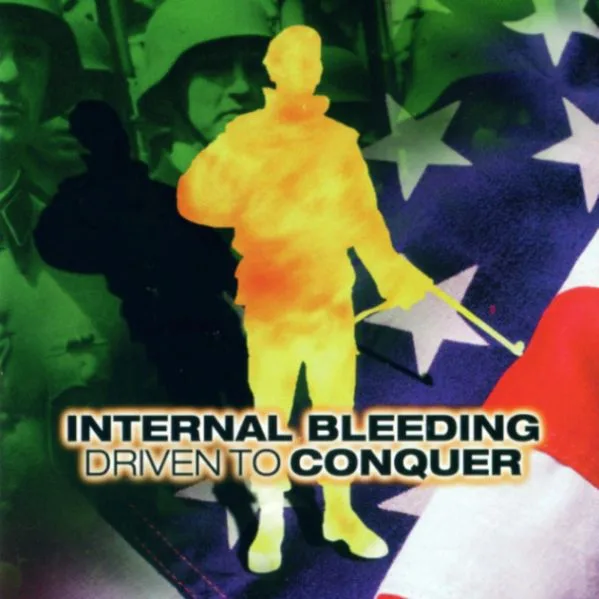
In 1999 came your 3rd and last album on Pavement called "Driven to Conquer". For this release, Frank Rini had left and you had a new singer Ray Lebron, who lasted only for this album. What happened with Frank and how did you find Ray and why didn't things work out with him? Did you tour behind this release at least?
CP: As with any band that starts as a group of teenagers and 20-year-olds, adult responsibilities eventually outweigh band priorities. Frank had his heart set on a career and received an excellent opportunity to start one, so he called me to his house and explained the situation. The news hurt me, but I completely understood his reason for leaving the band. We parted on excellent terms, are still tight friends, and speak often. He is one of my go-to people for advice and counsel regarding IB-related things. We don’t always agree, but his perspective is valuable.
1997-1998 was a tumultuous period for the band. Frank was gone, and we went through a small period with a fill-in Singer, Ryan Schimmenti, from the band Disfigured, as we searched for a new vocalist. I also had to remove Anthony Miola from the band, which was one of the most challenging things I ever had to do; I thought firing Wallace was rough, but firing Anthony was worse. He was my first real songwriting partner, and I was devastated to let him go. I won’t explain why I let him go because that is personal for everyone involved.
At this point, Billy and Brian were all pretty depressed. It felt like every move we’d make, we would be battered, beaten, and challenged to keep going. We almost gave up, but we all agreed that IB was something special, so we just picked up the pieces and moved forward.
Guy Marchais was always a good band friend and would hang out quite a bit in our studio. I discussed with him one night about where I wanted to take IB to shake things up and do something different. I showed him a few riffs I had been working on, and he picked up a spare guitar and started playing around. He knew exactly where to go and what to do. I asked him to join IB a few days later, and he accepted (he later left IB to join Suffocation).
Now that we had the core musical unit together, finding a vocalist was time. We had known Ray Lebron for a while, and we thought he had the potential to achieve what we were looking for. We had made a conscious decision that the vocals on the next album would be less guttural and more mid-range, clear, and powerful. We thought the scene was getting bogged down in toilet bowl vocals, frog vocals, etc., so we wanted to shake things up and do something different. Ray jumped at the chance to join the band and fit right in.
From there, the writing went incredibly fast. We’d have a solid song put together in a matter of days. The situation had gone from depressing to energizing. It took us three months to write all the material for the album, and I think I wrote all the lyrics in a week.
While we weren’t happy with Pavement, we still had to do one more album with them. Fortunately, they devised a decent budget, and we went to QualiTone Studios to record the album. Brian Griffin did a standout job helping us produce the album, and we were all overjoyed with the final product.
We didn’t have any tour support for the album, but we did many self-financed one-/two-week runs. We also played many smaller festivals, Milwaukee Metalfest, and some great regional shows.
Sadly, adulthood reared its ugly head again, and Ray left for Wisconsin to start his career. I haven’t seen him much, but when I do see him, it’s always a good time and many laughs.
Now I saw the 3 Pavement releases were re-released on a 3-tape boxed set. Have they been re-released on CD or vinyl since their original releases?
CP: Yes. Back on Black/Plastic Head has re-issued our Pavement albums on CD and Vinyl. The CDs come in a box set with extensive liner notes by Frank Rini and me. The vinyl is coloured and was released as stand-alone units. From there, numerous people have licensed the albums from Back on Black/Plastic Head. For example, Dissonant Tapes released a reel-to-reel tape version of Voracious Contempt, which is pretty wild. He did a great job with that.
To add some backstory, we wanted to purchase the rights to these albums back from Pavement, but our previous management’s foot-dragging and Pavement’s not-so-level business practices prevented us from seizing the opportunity. By the time we got a price out of Pavement, it was too late, and Back on Black bought them. Such is the way things sometimes go in this industry.
Now besides a comp released by Olympic Recordings in 2001, nothing new came out from you guys until 2004. What were you guys doing this whole time?
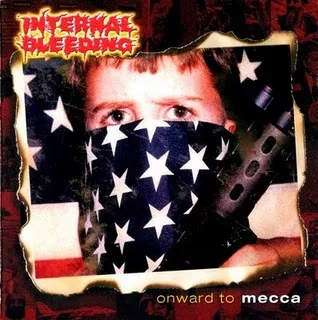
CP: This period was a very strange time for the band. We had the ‘Onward to Mecca’ album about 1/2 written, although we were calling it ‘Hatefuel’ at the time. I cannot remember all the details, but we were in limbo. Olympic had sold out to Century Media, and it was radio silence label-wise. We played some shows, and I believe we played at the first or second Maryland Death Fest during this time. During this period, I also took a ’sabbatical’ from the band because I had finally started my own business and needed to concentrate on growing the business.
Now in 2004, besides a 2 song single, you were back with a new full-length on Olympic Recordings called "Onward to Mecca". Why that title? How did you hook up with Olympic and were any other labels interested?
CP: I am trying to remember if Martti Payne from Olympic Recordings contacted me or if I contacted him. Regardless of the situation, he was a band fan, accommodating, and down to earth. He was excited about re-releasing the demos with a single while we finished writing our album.
After the Pavement deal, I was very cautious about record labels, so I wasn’t shopping the band to labels. I was bitter and angry then, especially after seeing some labels picking up bands who just took our sound and ran with it. I admit, I was pretty broken from the Pavement years. We had been screwed badly.
To clarify, Onward to Mecca came out on Century Media. Before the album came out, Olympic had sold to Century Media, and Century Media decided to pick up our contract for one album.
The name is pretty obvious. 9/11 happened, we lost a lot of friends and family, and our drummer Bill Tolley spent a lot of time down there with the fire department, digging up bodies, etc. The title was just a giant primal scream of rage aimed at the heart of something extremist Muslim terrorists look at as the holy land.
How would you describe your time working with Olympic? Did they give you a budget for the album or any tour support?
CP: Martti was an awesome guy, super friendly and accommodating, as I said before. The recording budget we received for Onward to Mecca was fair and reasonable. Century Media picked up our contract and kept the budget. We never had the chance to tour under the Olympic banner, but Century Media gave the band tour support, and the band toured twice to support Onward to Mecca.
Am I seeing things correctly that you only play the guitar on one track on the album? What happened?
CP: Yes, that is correct. Guy Marchais and I had written the bulk of the album, but when it came time to finish the writing process and record it, I had decided to step away from the band to start my marketing business (shameless plug: cgpcreative.com), and Guy had already left the band to join Suffocation.
Jerry (Jay) Lowe, Frank Buffolino, and Matt Ferrara finished writing the album, and along with Andy Hogan and, of course, Bill, they recorded Onward to Mecca.
Since I was the band's founder, the guys asked me to at least contribute something to the album since I had been involved in its development.
Where did the band find singer Jerry Lowe?
CP: We found him at a show we played in Ohio. He had been a singer for a hardcore band named Bodyfarm. He had a significant stage presence and a compelling voice. After hanging out with him at the show, we also discovered that he was hilarious, sharp-witted, and a pretty damn good lyricist.
When we got home, we had a band discussion, and we all agreed that we should throw current vocalist Mike Lotito out of the band and ask Jerry to join. Within three days of that meeting, I fired Mike and hired Jerry. Jerry moved out to New York a few weeks later, and we got right down to work.
Now after your 2004 release, you besides a compilation and a couple of singles, didn't have a full-length release until 2014. During this time were you at least playing out at all? Were there any thoughts of the band breaking up before the 2014 release?
CP: I wasn’t in the band at the time, but they completed two US tours and played many shows. Then, I think around 2009, things went into a state of complete silence. I was only half paying attention at this time, so I am not sure of the details of what transpired with the band.
Around 2011, I began picking up the pieces again and putting Internal Bleeding together again. Putting things back together opened up a big can of worms and it took me a while to get things straightened out, mend fences with ex-band members, apologize to some people I stepped on, and move forward with getting IB back to the way I think it should be.
How did you find singer Keith DeVito, who sang on a previous single before this 2014 release?
CP: Mike Lotito sang on the Alien Breed Single. We had a lot of hopes for him, but he turned out to be very unstable and, we suspect, had a serious drug problem; he was quickly released from the band. We found Jerry (Jay) Lowe shortly after we fired Mike.
When I reconstituted the band, it was me, Bill Tolley, Jay Liff, and Brian Hobbie. We started writing music quickly, and when it came time to think about vocalists, we wanted to try something different and more dynamic. Keith was the first person to come to mind. He had a unique style, wrote interesting and intelligent lyrics, and was local, so asking him would be great. I contacted him through Facebook; the next thing you know, he was in the band, and the reconstruction of IB was complete.
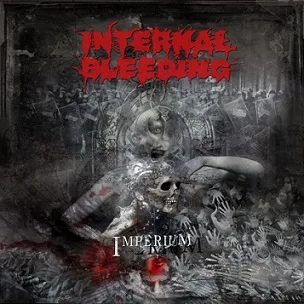
How long did it take to put together the songs for Imperium?
CP: It didn’t take long. When I put things back together, I already had about four songs figured out; the rest came about quickly. We used to jam quite a bit as well, so the development of everything was very organic, streamlined, and satisfying. When we weren’t jamming, we sent each other voicemails with riffs and ideas. When we’d get to practice, we’d go through all the voicemails and hammer away at the ideas we all thought were viable. We worked very hard to make the album different but not lose the core of the sound we had developed. Opinions vary on whether we succeeded in accomplishing our goal, but we all felt we produced something unique.
How was it working with Unique Leader Records? How would you compare with the previous labels you worked with?
CP: Unique Leader was the best record-label experience we ever had. At the time, Erik Landmark was still alive, and we regularly connected with him. He was very supportive and encouraged us to make the album we wanted. He never stuck his nose in our business or tried to get us to do anything other than what we set out to do. You cannot ask for much more.
Did you manage to do any type of touring behind this release?
CP: Fortunately, yes. We did a complete US tour with Suffocation, plus we did two small European tours and a few festival appearances. It was the first time we think we had the chance to properly support an album.
How many times has the band played overseas at any point or Mexico at all in your career?
CP: Oh yes, we’ve done 4 European tours, and a bunch of festivals and we just played last year’s Mexico Metalfest, which was a great experience! We’re hoping to do more shows in Europe in the future.
So now not much was heard from the band music-wise except for a 1 song single in 2017 and then in 2018 you released a new full-length called " Corrupting Influence" and along with it came a new singer that sang on the single and the album. How did you end up finding Joe Marchese?
CP: Joe had been friends with Chris McCarthy and Shaun Kennedy for many years, so asking him if he wanted to be in the band was natural. Joe also played in a Long Island band named Revenance, so we knew his abilities. We staged a “tryout” for him, even tho we already knew he was the guy to be in the band. It worked out well because Joe is a very well-rounded, intelligent person, so he not only helped write lyrics but also wrote some killer riffs for the album and did a lot of arrangement work with me.
What happened with Keith DeVito your previous singer?
CP: After Keith hurt his back at work, he never returned to his usual self. I think he got depressed, let himself go physically, and was becoming hard to work with. I don’t blame him; having your livelihood cut out from under you has to be a traumatic experience and would send me down a bad path, too. We did what we could to work with him, but it eventually became pretty difficult.
I talked with him on Christmas Day when I was at a party, and we mutually decided to part ways. I saw him a few months ago at 7:11, and we had a nice big old IB bear hug and chatted for a bit. I am glad I got to do that because I love Keith and had a lot of fun with him (he is funny as hell), and how things ended up always bothered me a lot.
Now obviously when bands are around for a long time there are bound to be line-up changes, even more so with underground bands. Was it frustrating to have to replace so many different singers up to this time?
CP: Singers, guitarists, bassists — I have replaced them all numerous times. Losing a member, finding a new one, and integrating them into the band is always an ordeal. Replacing vocalists is incredibly frustrating because when you choose a vocalist, they become the face of the band, and fans invest themselves in the vocalist, his personality, and the vibes he puts out. Frankly, I am tired of it and don’t know if I have the fortitude to go through the process again. The expression, “I’m too old for this shit!” It is apt here because my patience for dealing with replacements is pretty much at an end.
How was this release received overall? How long did it take to come up with the songs for it? Was it getting difficult at all to come up with new music after all this time?
CP: We wrote Corrupting Influence quickly. The entire process highly energized all of us. Better yet, because all of the band was local, we could jam 2 to 3 days a week and hash out songs together. Chris McCarthy stepped up in his position in the band, wrote some fantastic stuff, and added new elements to our sound.
Joe Marchese and Chris also encouraged me to expand on some of the things I was hinting at with the previous album, so there are more bluesy parts, soloing, clean parts, etc.
I think Corrupting is a great album. Unfortunately, the release of it got completely screwed up by circumstances beyond our control.
Did you get to do much touring behind this release? How hard was it to come up with a set list by now?
CP: We did one US tour and one in Europe. The US tour was interesting because Joe did half of it, and Frank Rini did the other half. Being back on the road with Frank was truly special for me, and we had a blast. Most of the shows were good; many old-school people came to see Frank.
I wish we could have done a few US tours to solidify the album, but it wasn’t meant to be. We did a lot of high-profile shows besides those tours, but it just wasn’t enough to properly support the album.
As for the setlist, it's always difficult at this age and time due to a huge back catalogue. We discussed it quite a bit, and I think we ended up with a decent balance of old and new songs. We tried to touch on every release at least once.
How were you approached by Dissonant Tapes, who put your 3 Pavement Records releases on cassette in a boxed set? How cool was it to see these releases on tape form after all these years?
CP: Back on Black bought the rights for our albums from Pavement. I am not happy about it, but our negotiations with Pavement broke down, and we could never repurchase the rights in time. Regardless, Back on Black did a great job on the packaging, allowing me a lot of flexibility with liner notes, etc.
Dissonant Tapes was exceptional in handling their cassette releases. They reached out to Back on Black, secured the license, and then they came straight to me for input. It was a fantastic collaboration, and they did a phenomenal job treating us with utmost respect and fairness. It's rare to find such a great partnership in this day and age!
It was mind-blowing to see these releases on cassette. Dissonant put a lot of love into them. What truly blew my mind was when he released Voracious Contempt on reel-to-reel — I never thought I would see that!
Who is in the band these days?
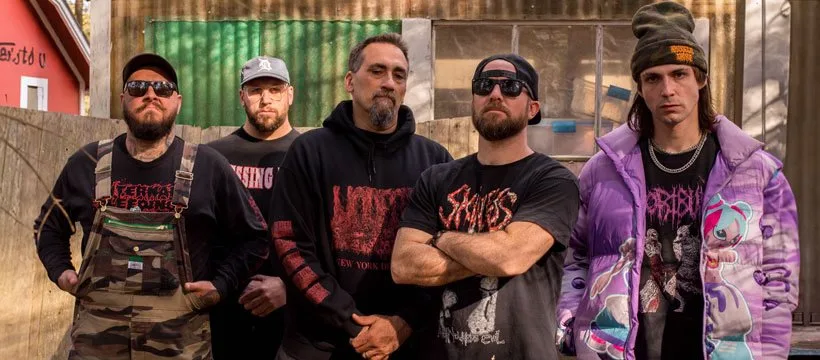
CP: Well, there is me, of course, Chris McCarthy on guitars and backing vocals, Steve Worley on vocals, Kyle Eddy on drums, Ryan Giordano on bass. That’s the band, I think, until the end. I don’t know if I can go through any more replacements. It’s a pretty solid lineup. We have our ups and downs, but hopefully, we can hang together until I reach retirement age, which isn’t too far away lol.
How did the tour you just finished recently go?
CP: Well, it was going great until we got to Hawaii. The immigration offices in Australia started demanding all kinds of paperwork that was impossible to produce at the last minute. It came down to the wire, and we had to decide whether to go rogue and try to get in or call the whole thing off. We discussed it with our booking agent and decided to cut our losses and go home from Hawaii instead of continuing to Thailand and Australia. It stinks; we took a financial loss, but fortunately, I did a lot of financial planning before this tour even started, so we covered many of our losses. It could have been so much worse.
If you’d like to help us cover some of those losses, we’re running a sale on tour merchandise here:
http://christopherp112.sg-host.com
You can also pick up some of our killer hot sauce.
I am still wrestling with the fact that over our 30+-year career, we rarely, if ever, let fans down. I cannot tell you how much this upsets me. I let hundreds of people down. I hope we get the chance to do good for them.
What are your plans for 2025 and beyond? Will new music come out?
CP: First, we must get our album “Settle All Scores” released. It’s about 90% ready to be handed into Maggot Stomp, and we have to finish up some guest vocals and the album cover. Once we get a clear picture of the album release date, we’ll start planning things to support the album.
In the meantime, we have many shows with bands such as Immolation, Mortician, Malignancy, All Shall Perish, and others. We’re also playing FYA, a hardcore festival in January.
Please plug any websites you have or social media sites.
Here’s a complete list of sites:
Main Website: https://internal-bleeding.com
Facebook: https://facebook.com/internalbleeding
Instagram: https://www.instagram.com/internal_bleeding
Merchandise: https://www.nightshiftmerch.com/pages/Internal-Bleeding
Hot Sauce: https://ibhotsauce.com
Tour merch blowout: http://christopherp112.sg-host.com
ChrisHornss is up for doing this interview and going through your whole band history for me. Any last words to wrap this up?
CP: Chris, thanks for taking the time to write out all these questions and for being patient with me as I took forever to get back to you. Hope to see you at a show shortly so we can have a long chat. (that would be cool-Chris)
I want to thank all of our fans, supporters, and friends who have been with us since the beginning and new fans. None of what we do would be possible without your support and encouragement.
Now, before we part, where were you when drummer Bill Tolley passed away?
CP: The day Bill died, Charlie from Suffocation called me. I assumed it was just the usual bullshit that we talked about on the phone. I barely got a “What’s up, Chuck!” out of my mouth when he said, “Turn on the TV right now.” I ran to the TV, turned it on, and got the news. At first, I stood there in complete shock, then I walked outside, sat on the rocker on my front porch, and started to cry. It took me a while to compose myself, but eventually, I got my shit together and went inside and went to sleep because I was emotionally drained.
That evening, friends began showing up, and we all hung out in my backyard, drinking toasts to Bi and swapping stories. Eventually, news vans started pulling up in front of my house, and reporters began asking to interview me about Bill. At first, I didn’t want to deal with interviews because I thought it inappropriate for reporters to come to my house. I thought about turning them away, but then I realized this was my chance to let the world know what kind of guy Bill was. They were tough interviews, but I am glad I did them. I think some of them are on YouTube, and I know some went across the world because I had friends in Europe who saw my interviews and wrote in to give all of us their love.
I miss Bill every day, and I hope that the way we’ve grown the band since his passing makes him proud.
I’ll end this incredible interview on that note because I am sure he is Chris...
Chris Forbes
WriterChris Forbes has been covering the underground metal scene since the late 80s and runs the Metal Reviews column at Extreminal.
Related Articles
Gammacide Interview With Rick Perry
Venom Prison Interview With Ash Gray
Comments
No comments yet.