The Call of Cosmic Horror: Literature, Philosophy, and the Metal Underground
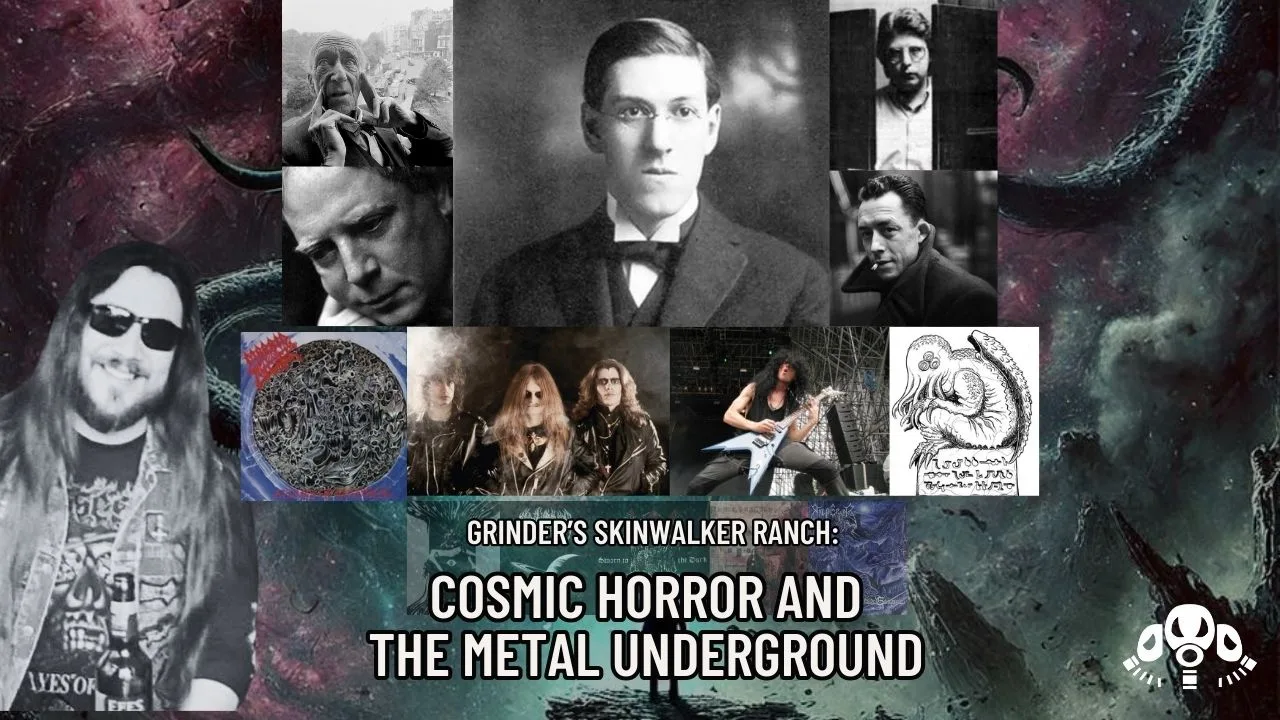

Cosmic horror is a subgenre of weird fiction that confronts readers with the terror of the unknowable and the insignificance of humanity in a vast, indifferent universe. First pioneered by H.P. Lovecraft in the early 20th century, cosmic horror literature goes beyond ghosts and vampires – it evokes existential dread, insanity, and awe in the face of ancient cosmic forces that defy comprehension. These themes have not only flourished on the page but have also deeply influenced underground metal music. Extreme metal genres like black, death, and doom metal have embraced cosmic horror’s psychological and philosophical anxieties, channeling them into lyrics and soundscapes. This article explores key authors of cosmic horror (from Lovecraft to Thomas Ligotti), analyzes the genre’s psychological and philosophical themes (existential dread, fear of the unknown, nihilism, cosmic pessimism), and examines how those same themes echo through the underground metal scene. We’ll look at specific bands, albums, and lyrics that draw on cosmic horror and synthesize how both literature and metal grapple with similar existential fears about human existence.
Elders: Key Authors of Cosmic Horror Literature
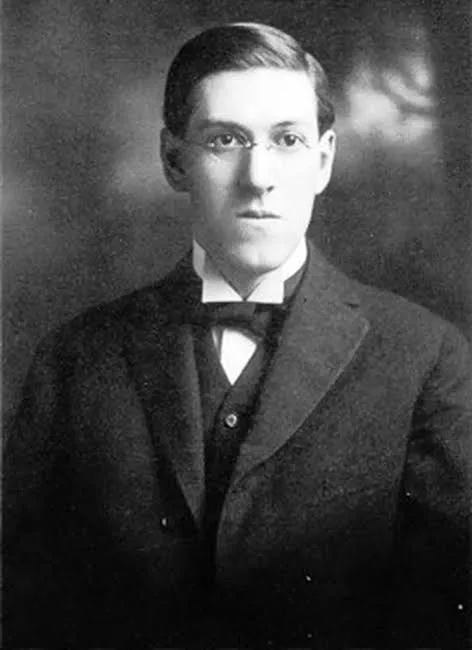
H.P. Lovecraft – The Father of Cosmic Horror: Any discussion of cosmic horror begins with Howard Phillips Lovecraft. Lovecraft (1890–1937) is widely regarded as “the father of cosmic horror and weird fiction”. His stories like “The Call of Cthulhu,” “At the Mountains of Madness,” and “The Dunwich Horror” introduced the idea that humanity is terrifyingly insignificant in a cosmos brimming with ancient, alien entities. Lovecraft’s tales are filled with monstrous “Old Gods” (such as the tentacled Cthulhu or the blind idiot god Azathoth) and forbidden knowledge that shatters the sanity of those who uncover it. These beings are not evil in a moralizing sense – rather, they exist on a scale so far beyond human understanding that they regard us with total indifference, like we might regard ants. Lovecraft’s personal philosophy, which he termed cosmicism or “cosmic indifferentism,” held that “common human laws and interests and emotions have no validity or significance in the vast cosmos-at-large”. In his letters, he bluntly wrote, “We are all meaningless atoms adrift in the void,” stressing a worldview of a meaningless, mechanical, and uncaring universe. This bleak cosmology, combined with his archaic prose and imaginative monsters, defined cosmic horror. (It must be noted that while Lovecraft’s cosmic vision was groundbreaking, his legacy is also marred by his personal xenophobia and xenophobia – aspects that modern writers and fans rightly criticize even as they admire his literary contributions.)
Lovecraft’s own 1934 sketch of his creation Cthulhu, an ancient cosmic entity sleeping beneath the sea. The incomprehensible, tentacled form of Cthulhu symbolizes the “terrifying vistas of reality” that cosmic horror unveils .
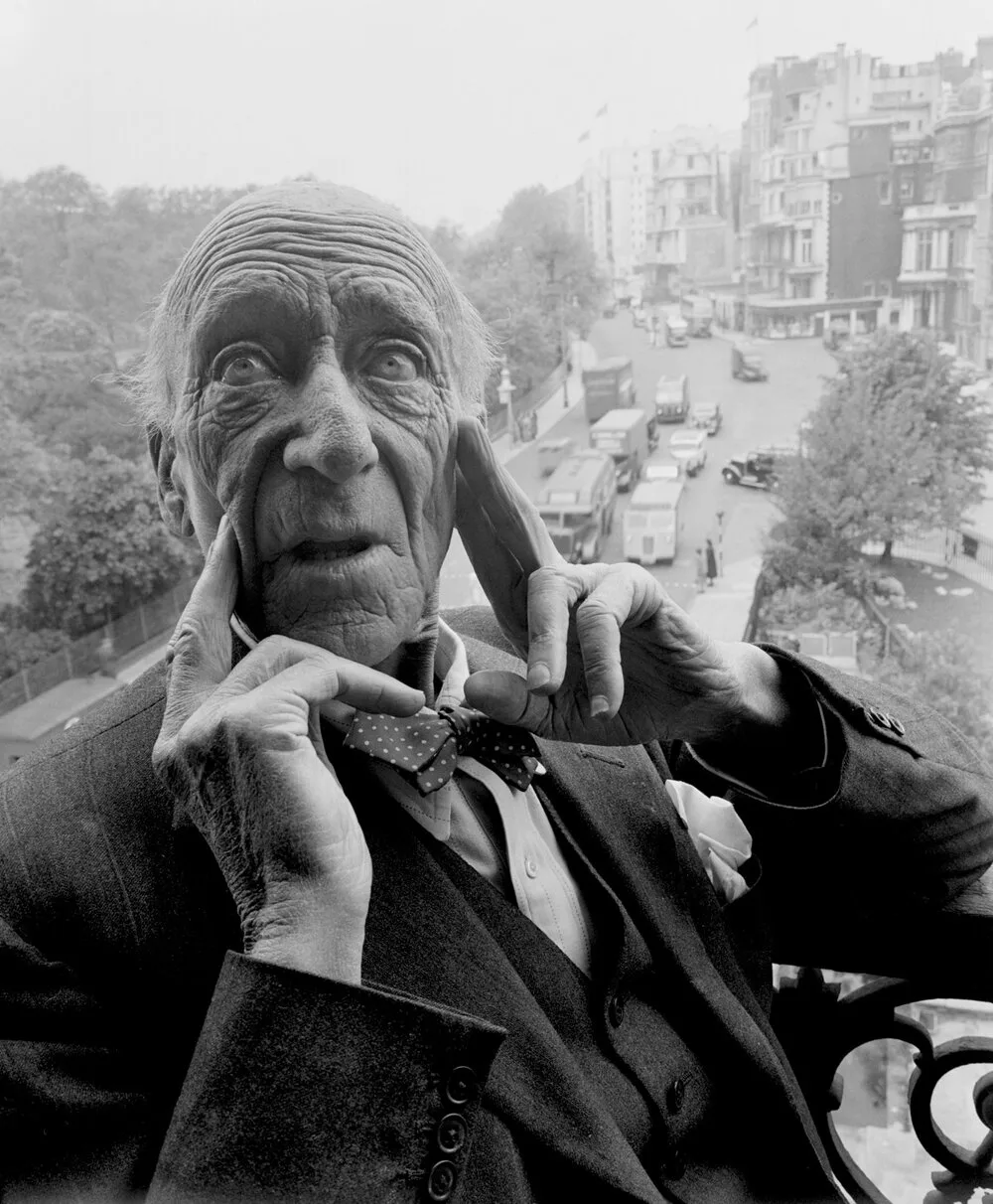
Other Pioneers – Machen, Blackwood, and Beyond: Lovecraft was influenced by earlier writers of the weird and macabre. Arthur Machen’s “The Great God Pan” (1894) and Algernon Blackwood’s “The Willows” (1907) are often cited as proto-cosmic horror tales that suggest unseen immensities and malign forces just outside human perception. Blackwood’s story “The Willows,” for example, evokes an impersonal, cosmic menace in nature that deeply impressed Lovecraft. Writers like Lord Dunsany (with his dreamy otherworlds) and Edgar Allan Poe also set the stage for cosmic dread. Lovecraft acknowledged these influences but took the ideas further – framing them in a universe devoid of human-centric comfort. After Lovecraft, several contemporaries and protégés expanded the mythos: Clark Ashton Smith spun baroque tales of alien gods, and Robert E. Howard and August Derleth incorporated Lovecraftian elements into their own stories. Together, these authors formed the early Cthulhu Mythos circle, exchanging ideas and collectively suggesting a shared universe of ancient gods and forbidden lore.
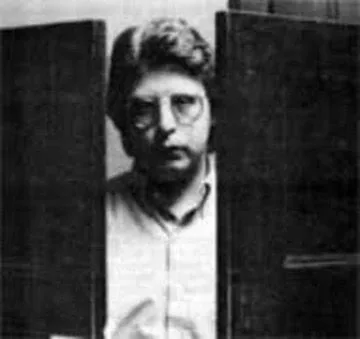
Thomas Ligotti – Modern Apostle of Cosmic Dread: In the late 20th century, Thomas Ligotti emerged as a key author, carrying cosmic horror into new psychological and philosophical territory. Ligotti, an American writer, has been open about Lovecraft’s influence on his worldview. In an interview, he noted that “the meaningless and menacing universe described in Lovecraft’s stories corresponded very closely to the place I was living… I was grateful that someone else had perceived the world in a way similar to my own view.”. Ligotti’s fiction, such as “Songs of a Dead Dreamer” and “Grimscribe,” often lacks Lovecraft’s tentacled monsters but retains the oppressive atmosphere of cosmic insignificance and nightmare logic. In stories like “The Last Feast of Harlequin” (which Ligotti dedicated to Lovecraft), human life is revealed as hideously trivial or controlled by malign forces. Ligotti’s originality lies in blending supernatural horror with philosophical pessimism – a point he makes explicitly in his non-fiction book The Conspiracy Against the Human Race (2010). In that work, Ligotti offers a series of essays exploring his nihilistic, antinatalist view that consciousness and life are “malignantly useless”. He posits that being alive and self-aware is fundamentally horrifying – an idea very much in line with cosmic horror’s assertion that reality is a nightmare for those who truly understand it. Other contemporary authors like Laird Barron, Caitlín R. Kiernan, and Jeff VanderMeer (in Annihilation, for instance) have also woven cosmic horror themes into modern literature, confronting readers with worlds where humans are not central and might be hopelessly lost in the “cosmic void”. However, Lovecraft and Ligotti stand out as towering figures: one established the cosmic horror mythos and its indifference to man, and the other internalized it, turning it into a personal and philosophical terror of existence itself.
Psychological Themes: Fear of the Unknown and Existential Dread
Cosmic horror is often described as “the fear of the unknown” elevated to a cosmic scale – and indeed, Lovecraft famously wrote, “The oldest and strongest emotion of mankind is fear, and the oldest and strongest kind of fear is fear of the unknown.”. In cosmic horror stories, protagonists frequently encounter phenomena that lie beyond the fringes of human knowledge: alien gods, dimensions outside of time and space, monstrous truths about Earth’s past, etc. This confrontation with the truly unknown breeds a profound existential dread. The characters (and, vicariously, the readers) experience a shattering of their reality and identity. For example, in Lovecraft’s short tale “Dagon” (1917), a shipwrecked sailor discovers an impossibly ancient sea monster on a newly risen island; the mere sight of this towering, slimy being and its eldritch monolith drives him to the brink of madness. Optimistic curiosity in these tales is punished – “truth-seeking characters” like scientists or scholars are often thwarted by incomprehensible terrors and a horrifyingly arbitrary cosmic order. The revelation of what lurks in the black seas of infinity is so overwhelming that the mind cannot cope. As Lovecraft's opening “The Call of Cthulhu” suggests, “some day the piecing together of dissociated knowledge will open up such terrifying vistas of reality… that we shall either go mad from the revelation or flee from the deadly light into the peace and safety of a new dark age.”. This idea – that forbidden knowledge of our true cosmic situation can induce insanity or desperate denial – is a cornerstone of cosmic horror psychology.
Key psychological themes in cosmic horror include Insignificance and Helplessness, Sanity’s Fragility, and Cosmic Indifferentism. Characters realize they are mere specks in an uncaring universe, which instills utter despair. In Lovecraft’s fiction, ordinary people (doctors, archaeologists, professors, etc.) gradually uncover clues that the universe is vastly older and stranger than they imagined and that powerful alien beings view humanity as inconsequential. This realization often leads to mental breakdown or nihilistic acceptance. The narrators of stories like “The Shadow over Innsmouth” or “The Colour Out of Space” survive encounters with the unknown but are deeply traumatized, left with shattered beliefs. The fear of insanity is ever-present – Lovecraft was personally haunted by the fear of inheriting his parents’ mental illnesses, and he projected this onto characters who dread that their minds cannot withstand the truth. The cosmic indifferentism of Lovecraft’s mythos (that the universe doesn’t even notice us) adds a uniquely chilling flavor to the horror. Unlike traditional horror, where a monster intends to do evil, cosmic horror often features entities that may not even recognize humans as more than insects. Their indifference is itself horrifying – as one scholar notes, Lovecraft’s cosmic forces “have as little regard for humanity as humans have for insects.”. For a person to realize that nothing in the grand scheme cares whether we live or die – that our existence might be entirely irrelevant – can provoke a deep existential crisis. Cosmic horror literature taps into that unsettling feeling. It’s a psychological terror not of death or pain per se, but of meaninglessness and the unknown depths that lie beyond the thin veneer of what we call reality.
Philosophical Themes: Nihilism, Absurdism, and Cosmic Pessimism
Underneath its tentacled monsters and moldy grimoire books, cosmic horror is fundamentally a philosophical meditation on nihilism and humanity’s place (or lack thereof) in the universe. Lovecraft’s cosmicism was explicitly a non-human-centered philosophy: it “states that there is no recognizable divine presence, such as a god, in the universe, and that humans are particularly insignificant in the larger scheme of intergalactic existence.”. In contrast to worldviews that place humans at the center of creation, cosmic horror posits a vast cosmos with no inherent purpose or meaning. Lovecraft was a mechanistic materialist and atheist; accordingly, his stories allow no comforting higher power. Instead, they often portray a clockwork universe of cause and effect (sometimes personified by ancient beings) grinding on eternally, heedless of mankind. This aligns cosmic horror with existential nihilism – the idea that life has no inherent meaning or value in the grand scheme. As one commentator summarizes, “Lovecraft thus embraced a philosophy of cosmic indifferentism. He believed in a meaningless, mechanical, and uncaring universe that human beings… could never fully understand.”.
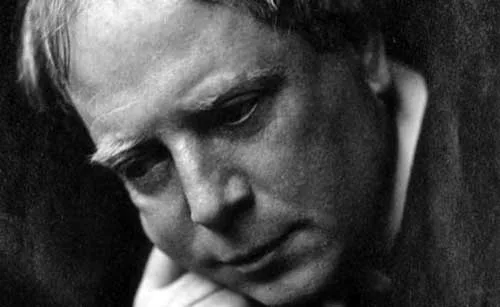
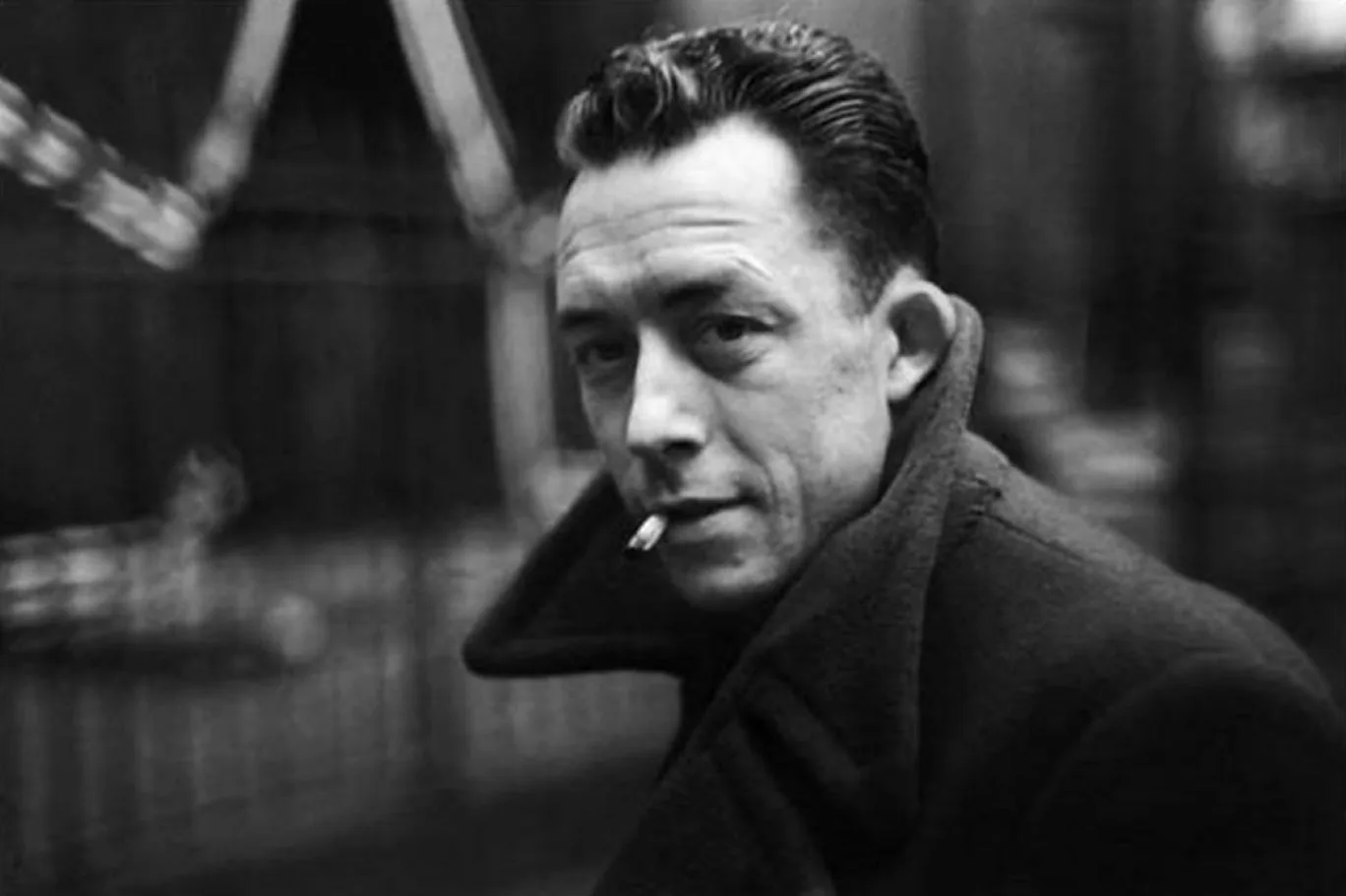
Cosmic horror also shares kinship with absurdism, the philosophical perspective highlighted by Albert Camus. Camus wrote of the “benign indifference” of the world towards humanity and argued that humans live in the contradiction between seeking meaning and the universe offering none. The protagonists of cosmic horror often experience this Absurd: they desperately try to rationalize what they encounter but ultimately face an environment that is utterly alien and uninterested in their plight. The absurd hero might respond with defiance or acceptance in Camus’ philosophy, but in Lovecraftian tales, the typical response is despair or madness in the face of the absurdity. The universe is not benign at all in these stories – it is full of horrors – but it is certainly indifferent to human notions of morality or justice. As Lovecraft writes, “human laws and interests and emotions have no validity or significance” on the cosmic scale. This evokes a sense of cosmic futility: even if one wanted to ascribe meaning to life, the stars stare back coldly and mute.
Perhaps the most profound philosophical theme in cosmic horror is cosmic pessimism. This goes beyond the idea that life has no meaning, suggesting that life or consciousness is itself a curse or a tragedy. Thomas Ligotti is the chief prophet of this view in modern times. In The Conspiracy Against the Human Race, Ligotti argues from a pessimistic stance that “being alive is not all right” and that the more one understands the world’s true horror – its “meaningless and often horrifying nature” – the more one might wish not to exist at all. This philosophy echoes Norwegian thinker Peter W. Zapffe’s idea that human consciousness is an evolutionary mistake, a tragic overabundance of insight that makes us aware of our existential predicament. Ligotti and similar cosmic pessimists take the nihilism of Lovecraft a step further: not only is there no meaning, but it’s actively bad (malignant) that we are here to realize that. In cosmic horror literature, this pessimism is often reflected in bleak endings and themes of inevitable doom. Nobody “wins” in a Lovecraft story; at best, they escape with scars or a hopeless understanding. The nihilistic ethos is summed up by Lovecraft’s cosmic vision of humans as “miserable denizens of a wretched little flyspeck” in an uncaring universe. Even those who aren’t familiar with academic philosophy can feel the weight of this pessimism when reading cosmic horror – the stories force us to ponder uncomfortable questions: What if there is no purpose to anything? What if we are alone in a silent void, with only monsters out there who neither notice nor care about us? Such questions place cosmic horror firmly alongside existentialist and nihilist thought. Indeed, philosophers and theorists have increasingly looked at Lovecraft’s work as a philosophically significant exploration of mankind’s place in a hostile or indifferent cosmos. The genre invites readers to confront the possible truth of human triviality – a contemplation as terrifying as any tentacled creature.
Influence of Cosmic Horror on Underground Metal Music
The bleak and grandiose vision of cosmic horror has had a notable influence far beyond literature – especially in the realm of underground heavy metal. Since the origins of heavy metal in the late 1960s and 70s, artists have been drawn to dark, otherworldly themes and imagery. Other horror literature (like the works of Poe or Stephen King) made its way into rock and metal, but Lovecraft’s cosmic horror has a uniquely strong foothold in extreme metal subgenres. This might seem surprising at first – Lovecraft was a quiet New England writer, not a headbanging musician – yet the thematic overlap makes the connection natural. Both cosmic horror and extreme metal revel in exploring humanity’s darkest emotions and existential fears. In fact, Lovecraft’s “sense of scope and boundless imagination” – his tales of “hideous… giant fleshy gods” and apocalyptic destruction – “were vital to heavy metal’s development.” The scale of Lovecraft’s monsters (world-devouring entities) and the “all-or-nothing darkness” of his universe resonated strongly with metal musicians looking to push boundaries of intensity.
Black Metal and the Cold Cosmic Void
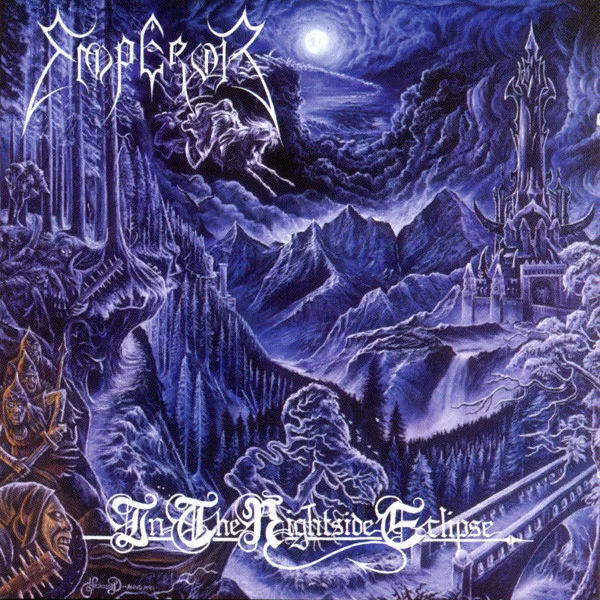
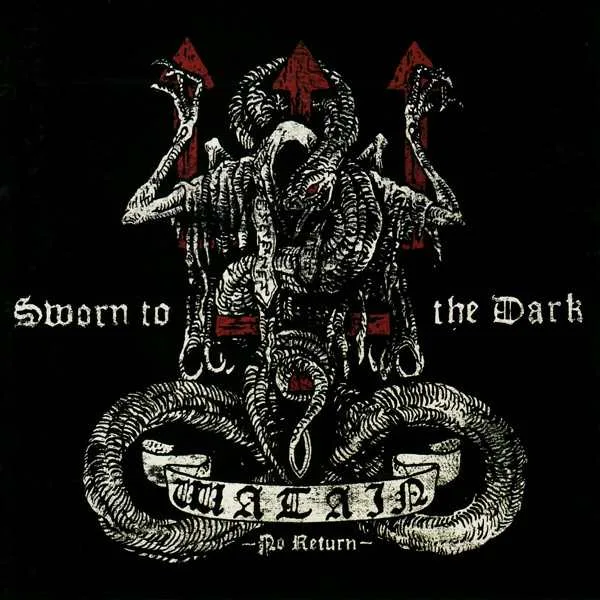
In black metal – a genre known for its raw sound, misanthropy and occult themes – cosmic horror’s influence manifests in lyrics about cosmic darkness, nihilism, and blasphemous entities. Early black metal pioneers like Bathory and Mayhem were more focused on Satanic and anti-Christian themes, but as the genre evolved, many bands incorporated the Lovecraftian worldview of a godless, indifferent universe. The Norwegian band Emperor, for instance, wrote in epic terms about cosmic landscapes and mystical worlds; their track “The Majesty of the Nightsky” evokes the insignificance of man beneath indifferent stars (a very Lovecraftian sentiment, even if not explicitly referencing his mythos). Swedish melodic black/death band Dissection filled their lyrics with cosmic and occult imagery of chaos and emptiness. More directly, French atmospheric black metal band The Great Old Ones take their name from Lovecraft’s pantheon of ancient gods. The Great Old Ones have released albums like Al Azif (2012, named after the fictional Arabic title of the Necronomicon) and Cosmicism (2019) – the latter title explicitly nodding to Lovecraft’s philosophy. Their music, with its eerie guitar harmonies and anguished screams, seeks to “evok[e] the unknown, the unseen, and the unconquerable” in true Lovecraftian spirit. Black metal’s trademark wall of sound and distant, shrieked vocals can create a feeling of the individual being subsumed by a cosmic void – an artistic parallel to cosmic horror’s themes. Swedish black metal band Watain captured this feeling in the song “Stellarvore” (2007). While not explicitly naming Lovecraftian creatures, “Stellarvore” conjures an “unearthly dragon devouring time and space in a single unthinkable instant”, a cosmic apocalypse right out of a Lovecraft tale. The mood of much black metal is one of cosmic nihilism – rejecting human religious comforts and embracing the darkness of an infinite, uncaring cosmos. This aligns perfectly with Lovecraft’s indifferent gods and the philosophy that humanity is nothing special. It’s no accident that black metal musicians often use cosmic or astral imagery (night skies, winter moons, outer space) to symbolize the cold emptiness they feel spiritually; it’s a very Lovecraftian kind of emptiness.
Death Metal and Lovecraftian Horrors
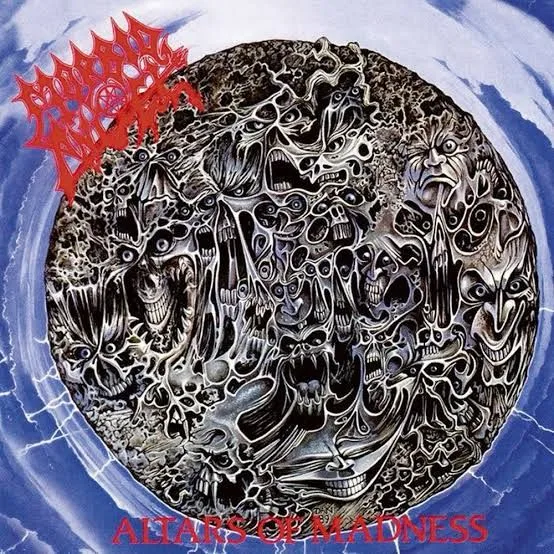
Death metal, with its focus on brutality, mortality, and the grotesque, also found fertile ground in cosmic horror. In fact, some of the earliest death metal bands made direct references to Lovecraft. Pioneering American death metal band Morbid Angel is a prime example. Morbid Angel’s guitarist took on the moniker Trey Azagthoth (after the Lovecraftian deity Azathoth), and the band’s lyrics are rife with occult and mythos references. As one metal journalist noted, “No death metal band has paid more homage to H.P. Lovecraft than Florida’s Morbid Angel” . On their classic album Blessed Are The Sick (1991), Morbid Angel moved away from gore and Satanism toward weird, otherworldly themes, invoking “squirming entities in Hell’s coldest corners” that feel straight out of a Lovecraft story. Another influential death metal act, Nile, though primarily focused on Egyptian mythology, has also woven Lovecraftian themes of ancient gods and lurking horrors in songs like “Evil To Cast Out Evil” (which references Lovecraft’s Elder Gods). The Danish band Illdisposed titled one of their early albums “To Kill for Skin / Seven Inches of Satanic Panic” (1992) with a track “Re-Sekhehm” referencing Necronomicon passages – showing how death metal globally picked up these occult strings.
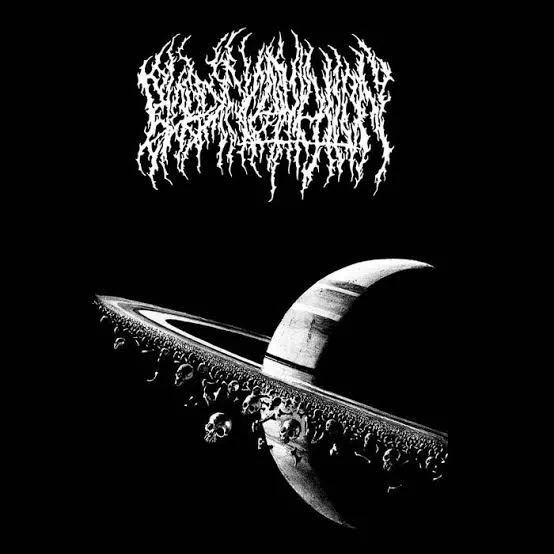
In the 2000s, a wave of openly Lovecraft-inspired death metal emerged. German band Sulphur Aeon, for instance, built their entire discography around the Cthulhu Mythos; “the band’s albums thematize the Cthulhu Mythos, which can also be found in the artwork of the albums.” Their album titles (Swallowed by the Ocean’s Tide, Gateway to the Antisphere, The Scythe of Cosmic Chaos) and songs (“Into the Courts of Azagthoth”, “Yuggothian Spell”) are basically love letters to Lovecraft. The music of Sulphur Aeon and similar bands is often described as “cosmic death metal” – combining pummeling riffs with an eerie, cavernous atmosphere as if recorded in a cyclopean tomb beneath the sea. Another acclaimed modern death metal band, Blood Incantation, explores cosmic themes (aliens, interdimensional travel, etc.) that, while more sci-fi, still convey the Lovecraftian idea of ancient intelligences and human futility in the face of the cosmos. Their 2019 album Hidden History of the Human Race features a 18-minute epic track that journeys through cosmic realms and ends with the subtitle “Slave Species of the Gods” – a concept very much in line with Lovecraft’s notion of humanity as playthings of ancient beings. The earlier wave of death metal in the ’80s and ’90s also had plenty of one-off tributes: Metallica, though a thrash band, directly paid homage with instrumental “The Call of Ktulu” (1984) and the crushing song “The Thing That Should Not Be” about a Lovecraftian monster . Many others followed – Rigor Mortis thrashed out “Re-Animator” (1988) based on a Lovecraft story , Hypocrisy and Entombed occasionally dropped cosmic horror references, and Swedish death-metal supergroup Bloodbath has a song “Ancient Eldritch” (2016) invoking forbidden tomes and elder things. Even the modern melodic death band The Black Dahlia Murder titled a song “Thy Horror Cosmic” (2003) and sings, “We pray for the earth to open / Free you of your ageless tomb… I scream for your return,” directly referencing Cthulhu’s worshippers calling for their Great Old One . Clearly, Lovecraft’s creations and themes have been a rich well of inspiration for death metal lyrics – providing grandiose, horrific mythologies beyond the usual gore and Satanism, and a philosophical heft (cosmic nihilism) that matches the genre’s sonic extremity.

Doom Metal and the Dread of the Void
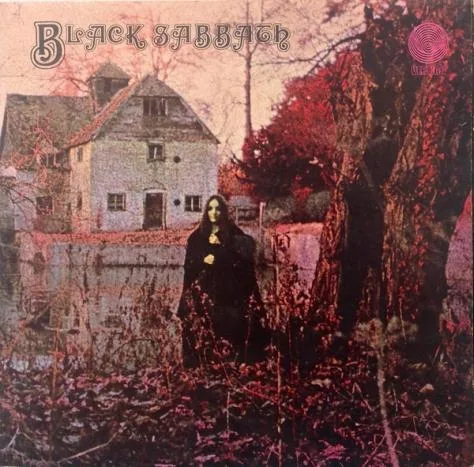
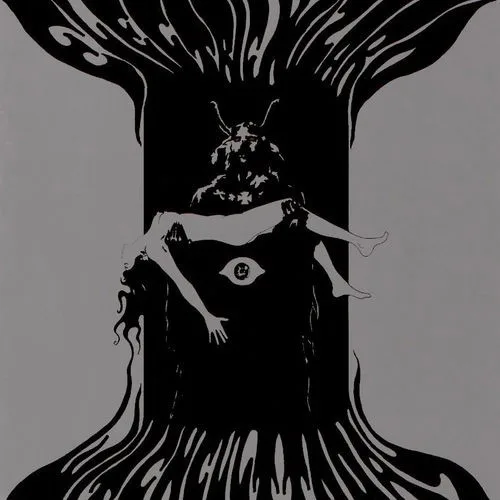
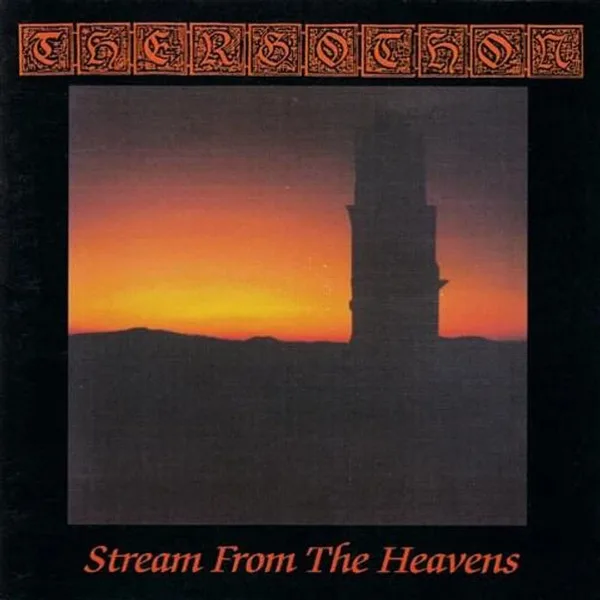
Doom metal, known for its slow, heavy riffs and themes of despair, is perhaps the metal genre closest in spirit to cosmic horror’s existential gloom. The very term “doom” resonates with Lovecraftian finality. Classic doom and stoner-doom bands have nodded to Lovecraft: Black Sabbath, the metal progenitors, had the song “Behind the Wall of Sleep” (1970) inspired by Lovecraft’s story Beyond the Wall of Sleep. Sabbath’s lyrics in that song are more psychedelic than Lovecraftian, but the reference helped set a precedent for occult and cosmic themes in doom. Fast-forward to the late 90s and 2000s, English doom band Electric Wizard made the Lovecraft influence explicit. Their song “Dunwich” (2007) retells The Dunwich Horror (about a witch’s monstrous offspring intent on ending the world) with a sludgy, bluesy groove. Electric Wizard even adds a tongue-in-cheek twist by suggesting “dope numbs the pain” for the doomed Dunwich sons, merging Lovecraftian apocalypse with stoner subculture. The album art and aesthetic of Electric Wizard and many doom bands often feature nightmarish landscapes, tentacled beasts, and crumbling tombs – imagery straight from pulp horror covers. Funeral doom, an extreme subgenre, pushes the cosmic despair further: bands like Thergothon and Evoken craft ultra-slow, crushing compositions that feel like the musical equivalent of staring into the abyss. Thergothon’s Stream from the Heavens (1994) includes a track titled “The Unknown Kadath in the Cold Waste,” directly referencing Lovecraft’s Dream Cycle and emphasizing cosmic coldness. Similarly, one-man doom project Catacombs released an album In the Depths of R’lyeh (2006) entirely devoted to Cthulhu’s underwater city – its cover depicting cyclopean ruins beneath a sickly sky, a scene of true Lovecraftian doom. These works illustrate how doom metal uses cosmic horror not just in lyrics but in the atmosphere: the slow tempos and crushing chords evoke inevitability and insignificance, as if time itself were grinding the listener down like an ancient glacier. The feeling of being enveloped by something much larger and darker than oneself is common to both cosmic horror literature and doom metal music.
Shared Visions of Dread: Cosmic Horror and Metal’s Philosophical Anxieties
Despite the differences in medium – printed stories versus distorted guitars – cosmic horror literature and underground metal music often address the same philosophical anxieties about human existence. Both ask: What if there is no guiding light, no order, and we are utterly insignificant? Both confront the possibility that behind the appearances of everyday life lies only indifferent darkness or chaos. In Lovecraft’s fiction, this confrontation is played out through narrative: a scholar slowly uncovers evidence of ancient gods and loses hope or sanity upon grasping the truth. In metal, the confrontation comes through sonic and lyrical aggression: a band screams about the end of the world or the void beyond the stars, forcing the listener to feel the intensity of that revelation. In each case, there is a kind of catharsis in facing the fear. Rather than denying the cosmic void, the artist (be it writer or musician) dives into it and creates art from it. As the scholar S.T. Joshi noted, weird fiction “forces the reader to confront… the nature of the universe and mankind’s place in it.” Extreme metal similarly forces the listener to confront harsh realities – death, nothingness, isolation – often at ear-splitting volume.
One reason cosmic horror and metal align so well is their mutual rejection of anthropocentrism. Mainstream art and music typically center on human emotions, romance, personal triumph, etc., whereas cosmic horror and genres like black metal or doom metal deliberately de-center the human. Lovecraft’s protagonists often realize “the human mind is not the centre of the universe” and that humans might be “miserable denizens” of a tiny speck in a vast, hostile universe. In underground metal, especially in misanthropic black metal, there is a similar sentiment of humans being worthless or contemptible against a backdrop of cosmic evil or emptiness. For example, Swedish band Shining or American one-man black metal band Leviathan express hatred of humanity and yearning for oblivion – philosophical pessimism set to music. This is essentially Ligottian thinking in metal form: the idea that it might be better if existence ended or that darkness is the true reality. It’s no surprise that pessimist philosophers like Ligotti and Eugene Thacker have been cited by some metal artists. Conversely, some philosophers have used metal and horror as illustrations of nihilist thought. The cross-pollination is considerable.
Another parallel is the use of myth-making to cope with cosmic dread. Lovecraft created a pseudo-mythology (Cthulhu, Yog-Sothoth, Necronomicon, etc.) almost as a creative way to personify and frame the amorphous dread he felt – “his own realm of dark forces as a shelter from the deadly light of universal indifference”. Many metal bands likewise construct their own lyrical mythologies to express cosmic horror themes. For instance, Celtic Frost’s album Monotheist and Triptykon’s Eparistera Daimones draw on occult/cosmic myth to convey despair and anger at existence. By writing songs about, say, Cthulhu rising to devour the world, metal musicians symbolically address feelings of powerlessness and rage at the absurdity of life. The exaggerated imagery becomes a vessel for very real emotions. Listeners, in turn, often find that both cosmic horror stories and extreme metal music provide a strange form of solace: it’s the comfort of knowing you’re not alone in sensing the darkness. As bleak as these art forms are, they validate the experience of existential fear. There’s a kind of communion in shouting along to a lyric about the end of all things or reading a story where the protagonist realizes humanity is doomed – a shared acknowledgement that yes, life can feel terrifying and pointless.
Finally, cosmic horror and underground metal both employ a distinct aesthetic of the sublime. Philosophers of the sublime talk about finding awe in terror – like gazing at a huge storm or the starry sky and feeling both fear and wonder. Lovecraftian horror and metal tap into that. The spectacle of a cosmic monster or an all-encompassing riff can paradoxically be exhilarating. As an example, Metallica’s instrumental “The Call of Ktulu” famously captures the looming size of Lovecraft’s beast in music – it’s heavy and ominous but also thrilling in its grandeur. Likewise, a doom metal song about the heat death of the universe might be depressing on the surface, but the sheer scale of it, conveyed through music, gives the listener a rush of the sublime. Both art forms thus allow us to play with nihilism and dread from a position of safety. We can contemplate the end of the world for 5 minutes in a song or 30 pages in a story and then return to our lives, perhaps with a slightly expanded perspective. In a sense, cosmic horror literature and metal music are exercises in philosophical therapy: by articulating the fear that existence might be pointless, they help us grapple with it. Rather than sugarcoat the human condition, they stare straight into the abyss – and by doing so, they give that abyss an imaginative form that we can at least temporarily comprehend or headbang along with.
Closing Reflections
Cosmic horror’s journey from pulp magazines to underground metal shows the enduring power of its themes. The psychological terror of the unknown and the philosophical abyss of cosmic indifferentism continue to captivate and inspire creators across mediums. Key writers like H.P. Lovecraft established the blueprint, and thinkers like Thomas Ligotti pushed it further into outright nihilism and pessimism. Extreme metal musicians, operating in a genre that values darkness and extremity, naturally picked up these ideas – writing songs and albums that pay homage to the Great Old Ones and the great cosmic void. Whether it’s through a chilling line in a story or a screamed lyric in a song, both cosmic horror literature and underground metal force us to confront the fragility of our place in the universe. In doing so, they paradoxically empower us to face that fragility. After all, once you’ve imagined apocalyptic gods or sung along to the end of the world, the mundane worries of life feel a little smaller. Cosmic horror and metal, in their own abrasive way, remind us of the same humbling truth: the universe is vast, ancient, and uncaring – and our human dramas, for all our passion and pain, are but a blink in the cosmic night. It’s a frightening thought, but in the distortion of a crushing riff or the pages of a weird tale, we find a strange comfort that we can scream into that void – and hear an echo.
Related Articles
Killer Tracks : Witchaven - Supermax
El Día de la Bestia: Apocalypse in a Shopping Mall
Which New Metal Bands Are On Extreminal's Playlist - Episode One
Comments
No comments yet.